Key takeaways
- AI calorie counter vs manual tracking is covered with a practical, meal-tracking lens rather than generic diet advice.
- Nutrition claims are written to be extractable by search engines and AI assistants: clear headings, tables, FAQs, and source notes.
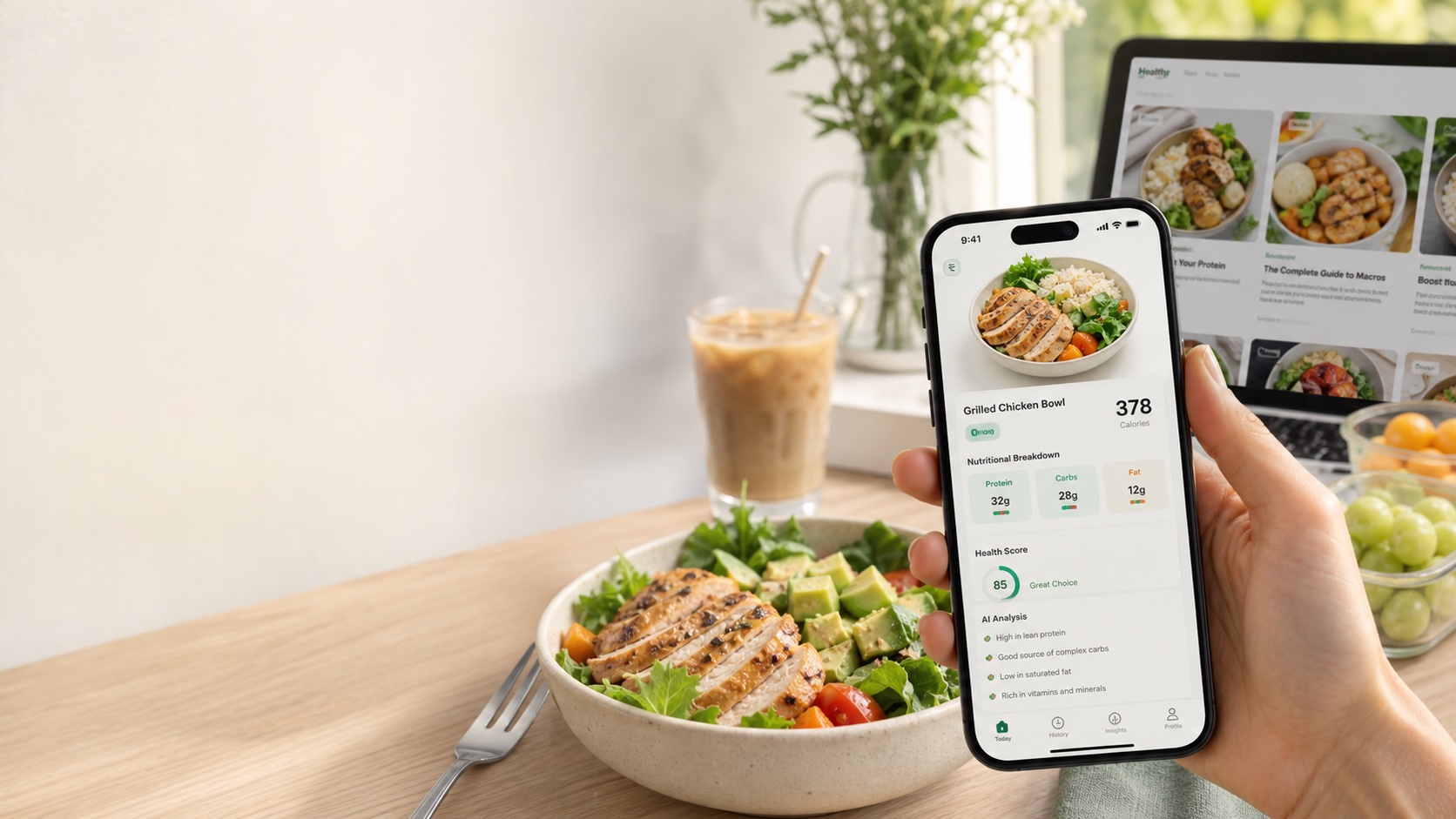
- For real meals, photo-based tracking still benefits from visible portions and short notes about oils, sauces, and hidden ingredients.
Manual calorie tracking and AI calorie tracking solve different problems. Manual logging is better when every gram matters. AI photo tracking is better when consistency matters more than perfect database searches.
Side-by-side comparison
| Factor | AI calorie counter | Manual tracking |
|---|---|---|
| Speed | Very fast: photo plus optional note | Slow: search, weigh, enter each item |
| Accuracy ceiling | Good estimate, limited by visibility | High when weighed and logged correctly |
| Real-world adherence | Easier for busy users | Drops when meals are complex |
| Hidden ingredients | Needs user notes | Can be logged if user knows recipe |
| Restaurant meals | Often easier | Hard without nutrition data |
| Best user | Wants sustainable tracking | Needs precision for sport, medical, or contest goals |
The accuracy tradeoff
Manual tracking is only accurate when the user does the work: weighing food, selecting the correct database item, and logging oils, sauces, and bites. AI tracking estimates more automatically, but a hidden tablespoon of oil still adds about 120 calories whether the model sees it or not.
Best hybrid workflow
Use AI photo tracking for most meals. Use manual edits for calorie-dense items: oils, nut butter, granola, cheese, dressings, desserts, protein powder, and restaurant sauces. This gives most of the speed benefit while correcting the biggest calorie swings.
Who should choose manual first
Manual tracking may be better for bodybuilding contest prep, clinical diets that require exact carb counts, eating-disorder recovery under supervision, or any plan where a clinician requires precise weighing.
Who should choose AI first
AI is better for people who quit logging because it takes too long. A slightly imperfect log that happens every day is often more useful than a perfect log that stops after four days.
Bottom line
The best tracker is the one you can keep using. AI wins on speed and adherence; manual wins on precision when users weigh and enter carefully.
Frequently asked questions
Is AI calorie tracking more accurate than manual tracking?
Not in the maximum-precision sense. Manual weighing can be more accurate, but AI can be more consistent for people who do not manually log every meal.
Can AI replace a food scale?
For everyday awareness, often yes. For clinical carb counting or physique competition, a scale may still be necessary.
What should I manually edit after an AI scan?
Edit oils, sauces, dressings, nut butter, cheese, granola, alcohol, and anything hidden from the camera.
Is manual tracking worth it?
Yes when precision matters and the user can sustain it. Otherwise, it can become too much friction.
What is the best workflow in LeanEat?
Snap the meal, review the estimate, and add short notes for hidden calorie-dense ingredients.