Key takeaways
- avocado nutrition facts is covered with a practical, meal-tracking lens rather than generic diet advice.
- Nutrition claims are written to be extractable by search engines and AI assistants: clear headings, tables, FAQs, and source notes.
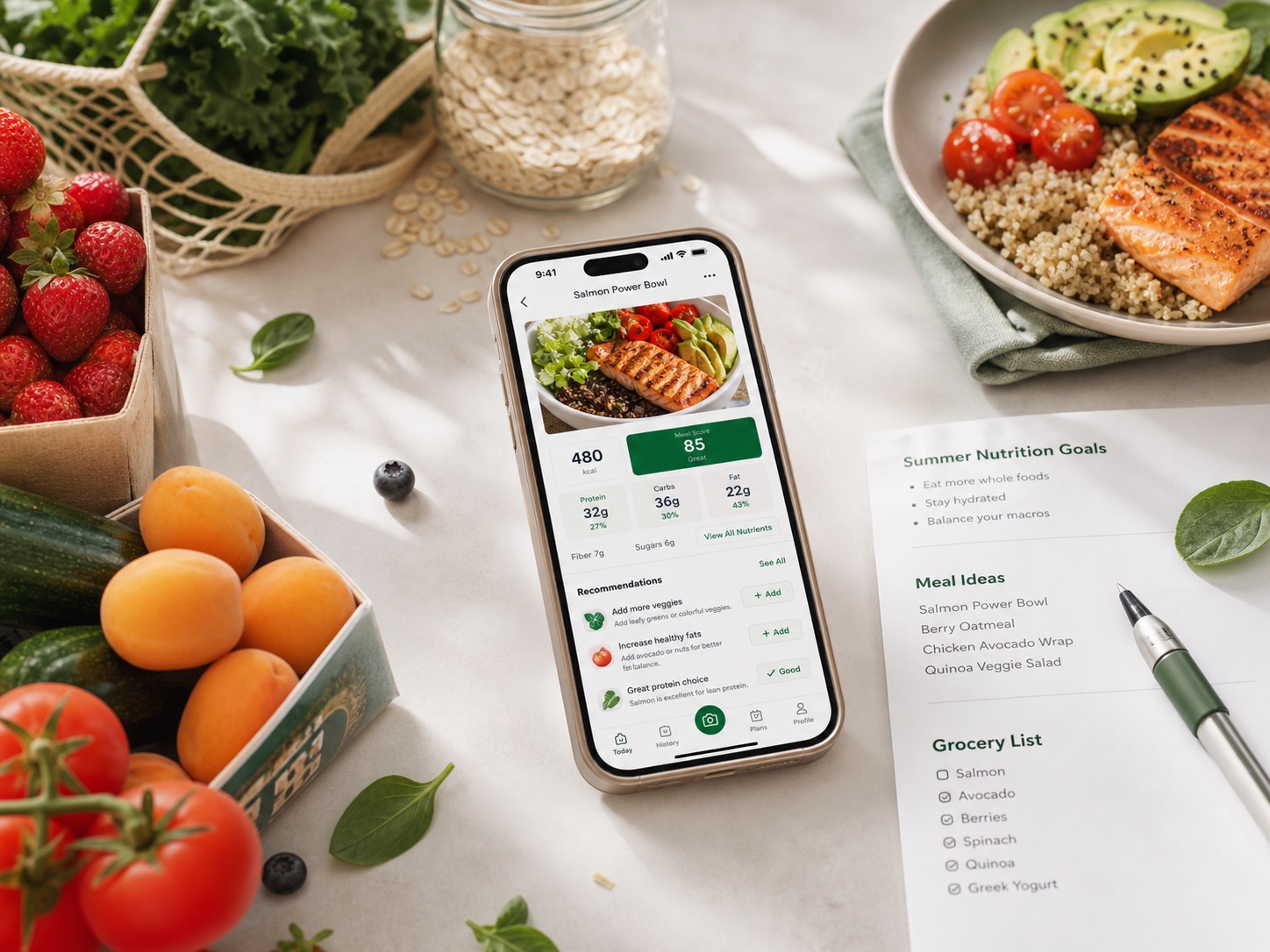
- For real meals, photo-based tracking still benefits from visible portions and short notes about oils, sauces, and hidden ingredients.
The average Hass avocado weighs around 200 grams (edible portion), packing about 240 calories, 22g of fat, 3g of protein, and 12g of carbs (10g of which is fiber). Despite being one of the few fruits with a meaningful fat content, avocado has earned a spot in nearly every evidence-based dietary pattern — Mediterranean, DASH, MIND, and even most ketogenic plans.
This guide pulls every number directly from USDA FoodData Central (Hass avocado, raw, NDB 09037) and explains what those numbers mean for your meals.
Avocado Nutrition Facts (per 100g, raw Hass)
| Nutrient | Amount | % Daily Value* |
|---|---|---|
| Calories | 160 kcal | 8% |
| Total Fat | 14.7 g | 19% |
| — Saturated Fat | 2.1 g | 11% |
| — Monounsaturated Fat | 9.8 g | — |
| — Polyunsaturated Fat | 1.8 g | — |
| Carbohydrates | 8.5 g | 3% |
| — Dietary Fiber | 6.7 g | 24% |
| — Sugars | 0.7 g | — |
| Protein | 2 g | 4% |
| Potassium | 485 mg | 14% |
| Magnesium | 29 mg | 7% |
| Vitamin K | 21 µg | 18% |
| Folate | 81 µg | 20% |
| Vitamin E | 2.1 mg | 14% |
| Vitamin C | 10 mg | 11% |
*Daily Values based on a 2,000-calorie reference diet (FDA). Individual needs vary.
For a medium whole avocado (~150g of flesh), multiply each value by 1.5. For half an avocado (~75g), divide by 1.33.
What Makes Avocado Stand Out
1. The fat profile is closer to olive oil than to butter
About 67% of avocado’s fat is monounsaturated, primarily oleic acid (C18:1) — the same fatty acid that drives olive oil’s reputation for cardiovascular benefit. Replacing 5% of energy from saturated fat with monounsaturated fat lowers LDL cholesterol by an estimated 8-10 mg/dL (Mensink, 2016).
2. Fiber content is exceptional for a fruit
13.5g of fiber in a medium avocado ≈ 48% of the adult daily target. About one-third is soluble fiber (helps blood sugar and cholesterol), two-thirds is insoluble (gut motility). For comparison: a medium apple has 4g, a banana has 3g.
3. Potassium beats a banana, gram for gram
Avocado has 485 mg of potassium per 100g — roughly 30% more than banana (358 mg/100g). Higher potassium intake correlates with lower blood pressure, especially in people with sodium-sensitive hypertension.
4. It’s a low-glycemic fruit
Net carbs per 100g of avocado: 1.8g (8.5g total carbs minus 6.7g fiber). That’s why it fits keto, low-carb, and diabetic meal plans without spiking glucose.
How Much Avocado Should You Eat?
Most clinical nutrition references converge on half an avocado to one whole avocado per day for healthy adults:
- Half an avocado (~120 calories, ~7g fiber) — a sensible serving as a side or topping
- One whole avocado (~240 calories, ~13g fiber) — works as the fat source for an entire meal (e.g., avocado toast + eggs)
- Two or more per day — calorically heavy (480+ kcal of fat alone). Reasonable for athletes or people in muscle-gain phases; rarely necessary otherwise
People on low-FODMAP diets should limit to ⅛ avocado per serving — avocado contains sorbitol, which can trigger IBS symptoms.
Best Ways to Use Avocado in Meals
- Breakfast: ½ mashed on whole-grain toast with a poached egg (~350 kcal, 18g protein with the egg)
- Lunch: ¼ sliced into a grain bowl or salad — adds satiety without overshooting calories
- Dinner: cubed into salsa or as a substitute for sour cream / mayo
- Post-workout: blended into a protein smoothie for slow-digesting fats and creamy texture without dairy
Avoid pairing avocado with another high-fat ingredient (cheese, bacon, oil dressing) unless you’re tracking macros — the calories add up fast.
When Avocado Might Not Fit Your Diet
- Very low-fat plans (e.g., Ornish, Pritikin) cap total fat at 10-15% of calories — even half an avocado uses most of the daily fat budget
- Allergic individuals — avocado allergy is rare but real; it cross-reacts with latex allergy in about 30-50% of cases
- Calorie-restricted weight loss (e.g., 1,200 kcal/day) — a whole avocado is 20% of the day’s energy. Use measured portions, not eyeballed amounts
The Bottom Line
A medium Hass avocado: ~240 calories, 22g of mostly heart-healthy monounsaturated fat, 13g of fiber, 485 mg of potassium per 100g. Daily inclusion is supported by decades of cardiovascular and metabolic research. The only real watch-out is portion size, because the same nutrient density that makes avocado valuable also makes it easy to overconsume calories on autopilot.
Frequently asked questions
How many calories are in one avocado?
A medium Hass avocado (about 200g, edible portion) contains roughly 322 calories. Per 100g of avocado flesh, the calorie count is 160 kcal according to USDA FoodData Central.
Is avocado fat actually healthy?
Yes. About 67% of the fat in avocado is monounsaturated (mostly oleic acid, the same fat that makes olive oil heart-healthy). Multiple meta-analyses show monounsaturated fat replacing saturated fat lowers LDL cholesterol and reduces cardiovascular risk.
How much fiber is in an avocado?
A medium avocado provides about 13.5g of fiber — roughly 48% of the daily recommended intake for adults (25-30g). That makes avocado one of the highest-fiber fruits available.
Can I eat avocado every day?
Most healthy adults can. Half to one whole avocado per day fits within typical fat-intake guidelines and provides fiber, potassium, folate, and vitamin K. People on calorie-restricted diets should account for the ~240 calories per medium avocado.
Is avocado good for weight loss?
Avocado is calorie-dense (160 kcal per 100g) but its fiber and fat content promote satiety. Studies (e.g., Heskey 2019, JAMA) found that adding avocado to meals reduces post-meal hunger without leading to weight gain. Portion control matters — half an avocado as part of a meal is a common evidence-based serving.