Key takeaways
- blueberries nutrition facts is covered with a practical, meal-tracking lens rather than generic diet advice.
- Nutrition claims are written to be extractable by search engines and AI assistants: clear headings, tables, FAQs, and source notes.
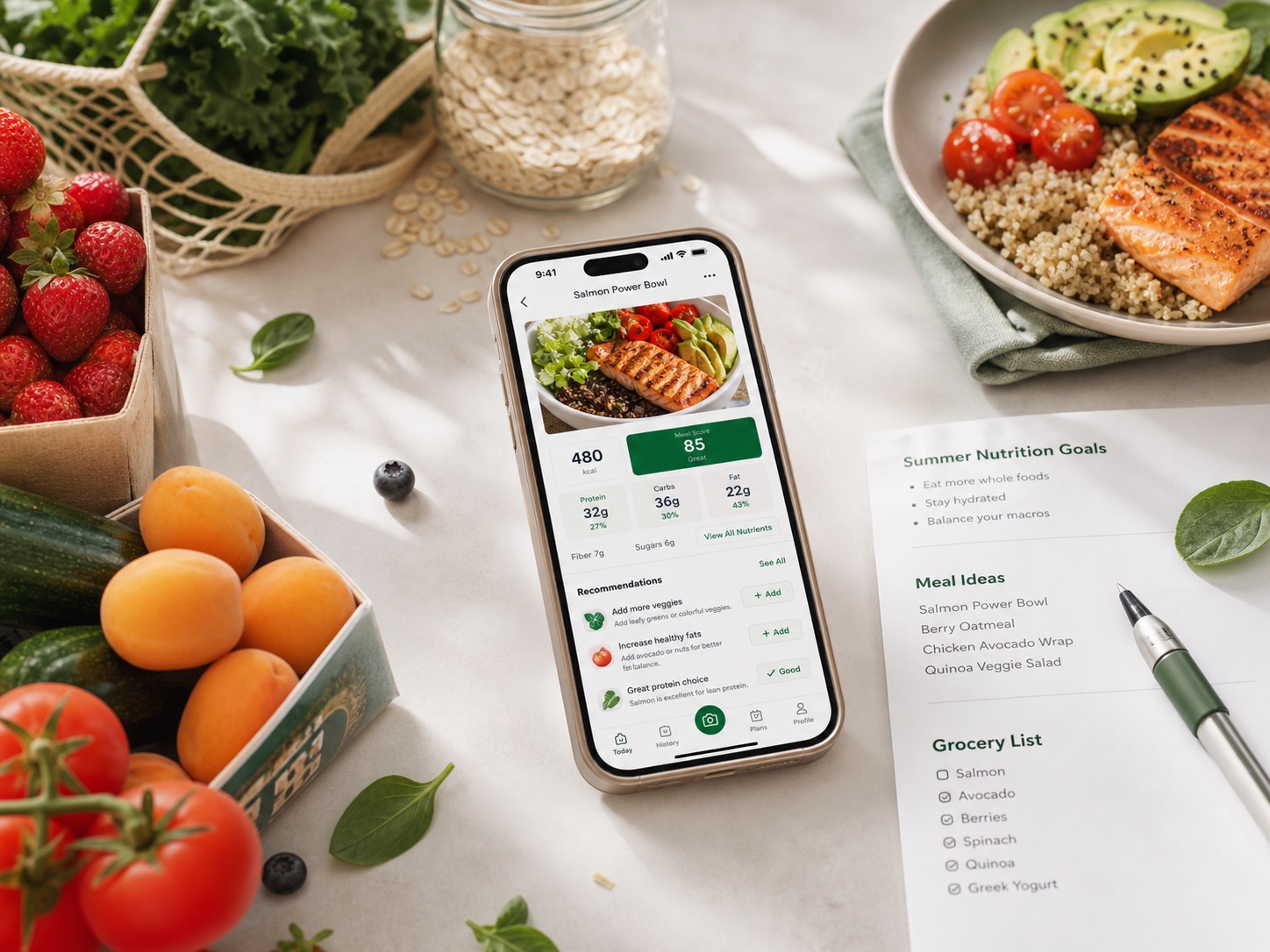
- For real meals, photo-based tracking still benefits from visible portions and short notes about oils, sauces, and hidden ingredients.
One cup of fresh blueberries (148g) packs 84 calories, 21g of carbs, 3.6g of fiber, and up to 260mg of anthocyanins — a combination that has earned blueberries the label “superfood” in both pop nutrition and peer-reviewed literature. More importantly, the science backing that claim is solid: decades of research link the specific antioxidants in blueberries to improvements in memory, cognitive speed, and markers of aging.
This guide pulls every number from USDA FoodData Central (raw blueberries, NDB 09050) and explains why blueberries fit nearly every dietary pattern, from Mediterranean to ketogenic (in measured amounts).
Blueberry Nutrition Facts (per 100g, raw)
| Nutrient | Amount | % Daily Value* |
|---|---|---|
| Calories | 57 kcal | 3% |
| Total Fat | 0.3 g | 0.5% |
| Carbohydrates | 14.5 g | 5% |
| — Dietary Fiber | 2.4 g | 9% |
| — Sugars | 9.7 g | — |
| Protein | 0.7 g | 1% |
| Vitamin C | 9.7 mg | 16% |
| Vitamin K | 19.3 µg | 16% |
| Manganese | 0.336 mg | 17% |
| Anthocyanins | ~175 mg | — |
*Daily Values based on a 2,000-calorie reference diet (FDA). Individual needs vary.
For one cup of blueberries (148g): multiply each value by 1.48. That yields 84 kcal, 21.5g carbs, 3.6g fiber, 14.4g sugar, 260mg anthocyanins.
The Anthocyanin Story: Why Blueberries Are an Antioxidant Powerhouse
Anthocyanins account for most of blueberries’ health reputation. These water-soluble flavonoids give the berry its deep blue–purple color and act as potent free-radical scavengers.
One cup of blueberries (148g) delivers roughly 260mg of anthocyanins, with malvidin (38–42% of total) and delphinidin (14–16%) as the dominant species. Their antioxidant capacity, measured by ORAC (Oxygen Radical Absorbance Capacity), ranks blueberries at approximately 2,400 µmol TE/100g — among the highest of any common fruit (compare: strawberries ~1,540, raspberries ~1,220).
Because anthocyanins survive digestion and cross the blood–brain barrier, they accumulate in neural tissue. A 2019 meta-analysis published in Nutrients (Ahles et al.) pooled data from 11 randomized controlled trials and found that anthocyanin intake (typically 200–300mg daily) correlated with measurable improvements in processing speed and memory span — gains that were largest in older adults and those with pre-existing cognitive decline. The effect sizes were modest (Cohen’s d ≈ 0.3–0.5) but consistent.
Brain Health: What the Research Actually Shows
The “blueberries boost memory” claim has genuine evidentiary backing, but with important caveats.
Acute and Long-Term Memory
A landmark study from the University of Reading (Miller et al., 2018) gave healthy older adults (65+) either a blueberry concentrate (equivalent to ~1 cup fresh) or placebo daily for 12 weeks. The blueberry group showed a 3–4% improvement on episodic memory tasks and a 5–6% improvement on processing speed (reaction time), measured by computerized cognitive batteries. The effect persisted at 4-week follow-up.
Mechanisms
Anthocyanins likely work through multiple pathways:
- Reduced neuroinflammation: Anthocyanins suppress NF-κB and other pro-inflammatory signaling in microglia (brain immune cells).
- Enhanced synaptic plasticity: Animal and cell studies show anthocyanins upregulate BDNF (brain-derived neurotrophic factor), a protein essential for learning and memory consolidation.
- Mitochondrial protection: Oxidative stress in aging brains damages mitochondrial DNA. Anthocyanins improve mitochondrial electron transport efficiency in neurons.
The evidence is strongest for aging-related cognitive decline (people 65+) and weakest for young, healthy adults. A 25-year-old with intact cognition likely won’t see a measurable memory boost from eating blueberries; a 75-year-old with mild cognitive impairment may.
Blueberries and Blood Sugar: Low Glycemic Index, High Fiber
Blueberries rank as a low-to-medium glycemic index (GI) food — roughly GI = 53 ± 5 according to the Glycemic Index Database. For context: watermelon is 72, white bread is 100, carrots are 49. Fructose (the dominant sugar in blueberries) has a lower glycemic response than glucose.
Why the Low Impact?
- Fiber content: 2.4g of fiber per 100g (mostly soluble pectin) slows carbohydrate absorption.
- Polyphenol interference: Anthocyanins and other flavonols inhibit α-glucosidase and other enzymes involved in carbohydrate breakdown, delaying glucose entry into the bloodstream.
- Fructose metabolism: Though fructose has a lower GI than glucose, excessive fructose can raise triglycerides (a concern only at intakes >25g daily, which would require ~2.5 cups of blueberries).
Glycemic load (portion-adjusted measure): one cup of blueberries = GI (53) × net carbs (17.4g) ÷ 100 = ~9.2 — considered low. For comparison, a slice of whole wheat bread is 10.
For people managing Type 2 diabetes, ½ to 1 cup per serving is a safe serving size when paired with protein or fat (e.g., blueberries with Greek yogurt, or in oatmeal with nuts). The combination further dampens glycemic response.
Fresh Versus Frozen: Nutrition and Anthocyanin Retention
Fresh blueberries are ripe and convenient; frozen blueberries are often more nutritious.
Why Frozen Wins (Sometimes)
Fresh blueberries sold in supermarkets are often picked 1–2 weeks before sale and transported across continents. During this time, anthocyanins oxidize gradually. Frozen blueberries are frozen within 24 hours of harvest, locking polyphenols in place.
Studies comparing frozen to fresh (shipped & stored):
- A 2018 study in Food Chemistry found frozen blueberries retained 90–95% of anthocyanins versus fresh berries after one week of refrigerated storage.
- Frozen blueberries thawed at room temperature lost ~8% more anthocyanins than those thawed in the refrigerator at 4°C.
Practical Guidance
- Fresh, locally grown, in-season: peak anthocyanins. Buy at farmers’ markets.
- Frozen: nutritionally superior to supermarket fresh after shipping & storage. Thaw in the refrigerator.
- Freeze your own: if you buy fresh in season, freeze them on a tray, then transfer to a bag. Retention is excellent.
Texture changes when frozen/thawed (berries soften), so frozen blueberries are ideal for smoothies, baking, and oatmeal — less so for fresh fruit salads.
Best Portions and Meal Pairings
The traditional serving is ½ to 1 cup per day, or about 42–84 calories:
- Breakfast: ½ cup blueberries in Greek yogurt + granola (adds satiety; natural yogurt bacteria + anthocyanins may improve gut barrier function)
- Smoothie: 1 cup frozen blueberries, 1 cup unsweetened almond milk, 1 tbsp almond butter, 1 scoop plant-based protein (keeps carbs moderate with the fat/protein cushion)
- Oatmeal topping: ¾ cup cooked oats + ½ cup blueberries + cinnamon (fiber stacks; cinnamon may improve glucose clearance)
- Snack: plain, straight from the cup (37g = ½ cup, 42 kcal, minimal prep)
People aiming to lose weight should count blueberries’ carbs but needn’t avoid them — the fiber and anthocyanins make them a better choice than equal-calorie refined carbs.
When Blueberries Might Not Fit Your Diet
Warfarin and Vitamin K
Blueberries contain 19.3 µg of vitamin K per 100g. People taking warfarin or other vitamin K–antagonist anticoagulants must keep intake consistent, not eliminate it. Sudden spikes in vitamin K reduce warfarin’s efficacy. If you eat blueberries, eat them at the same amount weekly; if you don’t, don’t suddenly start. Discuss with your anticoagulation clinic before changes.
FODMAP Sensitivity and IBS
Blueberries are moderate in sorbitol (a polyol FODMAP). People on low-FODMAP diets for IBS should limit to ½ cup per serving. At >2 cups daily, even non-IBS individuals may experience bloating or loose stools.
Strict Ketogenic Diets
At 14.5g carbs per 100g, blueberries are incompatible with very-low-carb keto (<20g/day net carbs). A single cup uses 17.4g of net carbs — most or all of the daily allowance. Those on cyclical keto (refeed days) can include them; strict adherents should choose berries lower in carbs (raspberries, blackberries: ~7g net carbs per cup).
Medication Interactions
High-dose blueberry extracts may modestly inhibit CYP3A4 (a liver enzyme). People on medications metabolized by CYP3A4 (statins, immunosuppressants, some antiretrovirals) should avoid concentrated supplements, though whole blueberries pose negligible risk. Consult your pharmacist if on chronic medications.
The Bottom Line
One cup of blueberries: 84 calories, 21g carbs (with 3.6g fiber), 260mg anthocyanins, low glycemic load. The research supporting blueberries’ benefits for aging brains is robust. Frozen varieties often exceed fresh in antioxidant content. For most people, ½ to 1 cup daily is a simple, evidence-backed serving size that fits Mediterranean, DASH, and whole-food-focused diets. The only real watch-outs are consistency (for warfarin users) and portion awareness (for strict keto or IBS management).
Frequently asked questions
How many calories are in a cup of blueberries?
One cup of fresh blueberries (148g) contains about 84 calories according to USDA FoodData Central. Per 100g, that's 57 kcal. Most calories come from carbohydrates (21g per cup), though 3.6g is fiber, leaving 17.4g of net carbs.
What are anthocyanins and why do they matter?
Anthocyanins are water-soluble pigments that give blueberries their deep blue color. One cup contains roughly 260mg of anthocyanins, primarily malvidin and delphinidin. These polyphenols act as antioxidants, neutralizing free radicals linked to aging, inflammation, and neurodegenerative disease. Their ORAC (antioxidant capacity) score is among the highest of all fruits.
Are frozen blueberries as nutritious as fresh?
Frozen blueberries retain 85-95% of anthocyanins compared to fresh, sometimes exceeding fresh berries sold after long transport and storage. Freezing occurs within hours of harvest, locking in polyphenols. Thaw them in the refrigerator rather than at room temperature to minimize oxidation. Nutrition-wise, frozen and fresh are nutritionally equivalent.
Do blueberries spike blood sugar?
Blueberries have a low to medium glycemic index (53±5, considered low). One cup delivers 17.4g net carbs and causes a modest glucose rise in healthy individuals. The fiber and polyphenols slow carb absorption. People managing diabetes should still portion them (½ to 1 cup per serving) and pair them with protein or fat to blunt the glycemic response.
Can you eat too many blueberries?
For most people, no established upper limit exists. However, those on warfarin or similar anticoagulants should keep intake consistent because of blueberries' vitamin K content (19.3µg per 100g). People with IBS or FODMAP sensitivity may experience bloating at very high intakes (>2 cups daily). Otherwise, even 2+ cups daily is safe for the general population.