Key takeaways
- chia seeds nutrition facts is covered with a practical, meal-tracking lens rather than generic diet advice.
- Nutrition claims are written to be extractable by search engines and AI assistants: clear headings, tables, FAQs, and source notes.
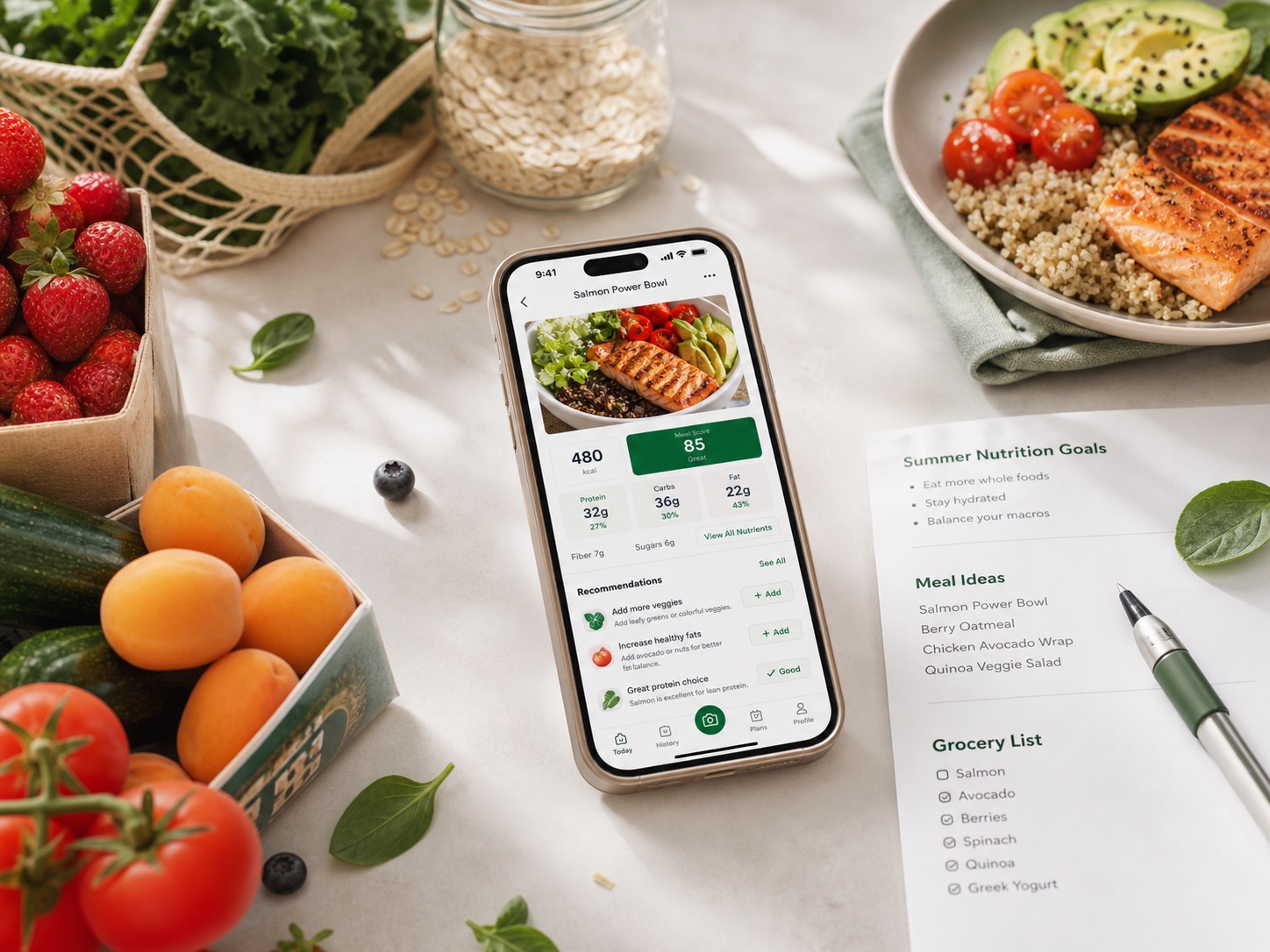
- For real meals, photo-based tracking still benefits from visible portions and short notes about oils, sauces, and hidden ingredients.
Chia seeds are the highest plant-based source of omega-3 fatty acid (ALA) on the grocery shelf — one ounce delivers 5 grams, more than flax or walnuts. Yet their real magic lies in their fiber and gel-forming capacity: those same 28 grams pack 10 grams of fiber and absorb 10–12 times their weight in water, making them a go-to for satiety and blood-sugar stability. This guide pulls every number from USDA FoodData Central (Chia seeds, raw, NDB 12006) and explains how to use them safely and effectively.
Chia Seeds Nutrition Facts (per 1 oz / 28g, raw)
| Nutrient | Amount | % Daily Value* |
|---|---|---|
| Calories | 138 kcal | 7% |
| Total Fat | 8.7 g | 11% |
| — Saturated Fat | 0.8 g | 4% |
| — Polyunsaturated Fat (ALA omega-3) | 5.0 g | 286% |
| — Monounsaturated Fat | 0.6 g | — |
| Carbohydrates | 12 g | 4% |
| — Dietary Fiber | 9.8 g | 39% |
| — Sugars | 0.0 g | — |
| Protein | 4.7 g | 9% |
| Calcium | 179 mg | 14% |
| Iron | 2.4 mg | 13% |
| Magnesium | 95 mg | 23% |
| Phosphorus | 244 mg | 20% |
| Manganese | 0.6 mg | 30% |
| Zinc | 1.1 mg | 7% |
*Daily Values based on a 2,000-calorie reference diet (FDA). Individual needs vary.
For a typical chia pudding serving (3 tablespoons / ~15g), divide each value by approximately 1.87. A tablespoon of chia seeds (10g) contains roughly 49 calories and 1.8g fiber.
Plant-Based Omega-3: The Chia Seed Distinction
Chia seeds contain 5 grams of alpha-linolenic acid (ALA) per ounce — a plant-based omega-3 polyunsaturated fat. ALA is an essential fatty acid (your body cannot synthesize it), yet it occupies a unique position: it is the precursor to EPA (eicosapentaenoic acid) and DHA (docosahexaenoic acid), the long-chain omega-3s abundant in fish.
The conversion problem: Your body converts ALA to EPA at rates of 5–10%, and to DHA at even lower rates (under 5%) (NIH Office of Dietary Supplements). This is why vegans and vegetarians who rely solely on plant sources sometimes supplement with algae-derived EPA/DHA. However, regular chia seed consumption still provides cardioprotective benefit — a 2015 randomized trial in Nutrition, Metabolism & Cardiovascular Diseases found that participants who consumed ground chia seeds daily experienced a 20% reduction in triglycerides and improved LDL particle size within 12 weeks.
Best practice: Use chia seeds as part of a broader plant-omega-3 strategy (ground flaxseed, walnuts, walnut oil). Grind chia seeds or soak them to improve ALA bioavailability — whole seeds pass through the digestive tract relatively intact.
Fiber and Gel-Forming Capacity: Why Soaking Matters
The gel phenomenon
When chia seeds contact water, they form a viscous gel coating within 15–30 minutes — each seed absorbs 10–12 times its weight in liquid. This is due to soluble fiber (beta-glucans and mucilage) that hydrates and swells. The gel creates a physical barrier that slows gastric emptying and nutrient absorption, leading to a more gradual blood-sugar rise and sustained satiety.
Soaked vs. unsoaked impact:
- Soaked chia (chia pudding, smoothies): Gel is pre-formed. Digestion encounters a uniform, easy-to-process matrix. Slower glucose absorption, lower glycemic load.
- Unsoaked dry chia (sprinkled on yogurt, granola): Seeds begin hydrating in the mouth and throat. Risk: insufficient saliva + fluid intake can cause partial hydration in the esophagus, potentially leading to choking or throat discomfort. The American Academy of Otolaryngology recommends always soaking chia seeds or consuming them with at least 8 ounces of liquid.
Fiber breakdown (per 1 oz)
- Insoluble fiber: ~6.9g — stimulates gut motility, feeds beneficial bacteria
- Soluble fiber: ~2.9g — slows glucose absorption, supports lipid metabolism
This 70:30 insoluble-to-soluble ratio is favorable for digestive regularity without excess fermentation.
Bone and Mineral Content: Calcium, Magnesium, and Phosphorus
Chia seeds are a nutrient-dense source of bone-supporting minerals, particularly valuable for people who avoid dairy or supplement insufficiently.
| Mineral | Per 1 oz | % DV | Notes |
|---|---|---|---|
| Calcium | 179 mg | 14% | Slightly less bioavailable than dairy due to phytates (see mitigation below) |
| Magnesium | 95 mg | 23% | Critical cofactor for ATP synthesis and muscle function; most Americans undereat magnesium |
| Phosphorus | 244 mg | 20% | Works synergistically with calcium for bone mineralization; healthy ratio is 1:1 to 2:1 (Ca:P) |
| Manganese | 0.6 mg | 30% | Cofactor for collagen synthesis and bone matrix formation |
Bioavailability consideration: Chia seeds contain phytates, compounds that bind minerals and reduce absorption. Soaking, sprouting, or roasting for 10–15 minutes at 350°F reduces phytate content by 20–50%, improving mineral uptake. For someone eating chia seeds 3–4 times per week, soaking is a practical step; for daily users, consider occasional roasting.
Clinical relevance: A 2012 study in Nutrition Reviews found that regular consumption of seeds (chia, flax, sunflower) was associated with improved bone mineral density in postmenopausal women, independent of dairy intake.
How to Incorporate Chia Seeds Into Your Diet
Chia pudding (classic)
Recipe per serving (2–3 Tbsp chia / 20-30g):
- 2–3 tablespoons chia seeds
- 1 cup plant-based or dairy milk (or coconut milk for creaminess)
- 1 tablespoon maple syrup or honey (optional)
- ½ teaspoon vanilla extract
- Pinch of salt
Mix, refrigerate for 4+ hours or overnight. Stir before serving if separated. Top with fresh berries, nuts, or coconut. Nutrition per serving: ~140–170 kcal (depending on milk type), 7–8g protein, 7g fiber, 2g ALA.
Smoothies and drinks
Add 1 tablespoon (10g) of whole chia seeds to smoothies in the final 10 seconds of blending — whole seeds don’t break down in liquid and add textural interest. Or pre-soak in the milk component 10 minutes before blending. Pro tip: If you prefer a smoother texture, grind chia seeds in a spice grinder first; ground chia distributes more evenly and is more visually appealing in beverages.
Egg substitute (baking)
- 1 tablespoon chia + 3 tablespoons water = 1 egg equivalent (in terms of binding and moisture)
- Mix and let sit 15 minutes until gel forms
- Works best in dense items: brownies, muffins, energy bars
- Less effective in applications requiring rise or structure (cakes, meringues) — use 3–4 chia eggs for recipes calling for multiple eggs in those cases
Breakfast additions
- Stir 1 tablespoon into Greek yogurt or cottage cheese for added fiber and ALA
- Mix into overnight oats (1–2 tablespoons per jar)
- Sprinkle (pre-soaked) over granola or chia-seed bread
When Chia Seeds Might Not Fit Your Diet
Choking risk (most common concern)
Unsoaked or insufficiently hydrated chia seeds can swell in the throat or esophagus if insufficient fluid accompanies them. Mitigation: Always soak before consuming, or pair with 8+ ounces of liquid and chew thoroughly. Elderly individuals, young children, and those with dysphagia (swallowing disorders) should consume only pre-soaked chia or chia-seed-based products (crackers, chia pudding).
Sudden high-fiber introduction
A rapid jump from 15g to 50+ grams of dietary fiber per day (e.g., eating a large chia-seed smoothie daily without prior fiber habit) triggers bloating, gas, and abdominal discomfort. Best practice: Add 1 tablespoon per week, increase water intake simultaneously. If you already eat 25+ grams of fiber daily from vegetables and whole grains, adding chia is seamless.
Rare digestive blockage
In very rare cases — typically in individuals with a history of bowel obstruction or stricture, or those with severely limited fluid intake — unsoaked chia seeds have been reported to contribute to esophageal or intestinal blockage. There are documented case reports in Clinical Gastroenterology and Hepatology, but incidence is vanishingly small in people who soak seeds and maintain normal fluid intake.
Anticoagulant interactions
Chia seeds’ omega-3 content has modest antiplatelet effects. People taking warfarin (Coumadin) or other anticoagulants should maintain consistent chia intake and inform their physician — the concern is fluctuation, not absolute consumption. Eating chia seeds once a week poses no clinically significant risk; eating 3+ tablespoons daily long-term should be noted during anticoagulant monitoring.
Very low-fat or low-FODMAP diets
Chia seeds are 28% fat by weight — incompatible with Ornish or Pritikin protocols. They also contain fructose (small amount) and may trigger symptoms in strict low-FODMAP regimens (though data is limited). People on low-FODMAP should trial carefully or consult a registered dietitian.
The Bottom Line
One ounce of chia seeds: 138 calories, 5g plant-based omega-3 ALA, 10g fiber, 5g protein, and 14% of the daily calcium target. Their gel-forming capacity makes them uniquely satiating — soaked chia pudding is an effective tool for appetite control and blood-sugar stability. The key safety rule is simple: always soak or consume with abundant water; never eat dry seeds straight from the bag. For people already eating adequate fiber (25+ g/day), chia seeds integrate seamlessly into smoothies, yogurt, and puddings. For those new to high-fiber foods, introduce gradually — 1 tablespoon per week, with consistent water intake — to let your microbiome adapt.
Frequently asked questions
How many calories are in an ounce of chia seeds?
One ounce (28g) of chia seeds contains approximately 138 calories according to USDA FoodData Central. That makes chia seeds energy-dense despite their tiny size. For context, a typical serving in chia pudding is 2-3 tablespoons (about 0.5 oz), which delivers roughly 70 calories.
Are chia seeds really high in omega-3?
Yes. Chia seeds contain 5g of omega-3 ALA (alpha-linolenic acid) per ounce — more omega-3 than any other plant seed. ALA is converted to EPA and DHA at low rates (~5-10%) in the body, but clinical studies show chia seed consumption improves blood lipid profiles and inflammation markers.
What does chia gel do and why does it matter?
Chia seeds absorb 10-12 times their weight in water, forming a gelatinous coating around each seed. This gel slows gastric emptying, helping you feel full longer and stabilizing post-meal blood sugar. Unsoaked dry seeds can absorb water in the throat and esophagus — always soak or consume with adequate fluids.
How much fiber is in chia seeds?
One ounce of chia seeds provides 9.8g of dietary fiber — roughly 39% of the 25g daily minimum for adults. About 70% is insoluble (gut motility) and 30% is soluble (blood sugar and cholesterol modulation). This fiber load is why gradual introduction matters; sudden high intake causes bloating.
Can I use chia seeds as an egg substitute?
Yes. Mix 1 tablespoon of chia seeds with 3 tablespoons of water, let sit for 15 minutes until gel forms, then use as a 1-egg replacement in baking. The gel mimics the binding properties of eggs but adds moisture without the protein or rise, so it works best in dense batters (muffins, brownies) rather than meringues or airy cakes.