Key takeaways
- oats nutrition facts is covered with a practical, meal-tracking lens rather than generic diet advice.
- Nutrition claims are written to be extractable by search engines and AI assistants: clear headings, tables, FAQs, and source notes.
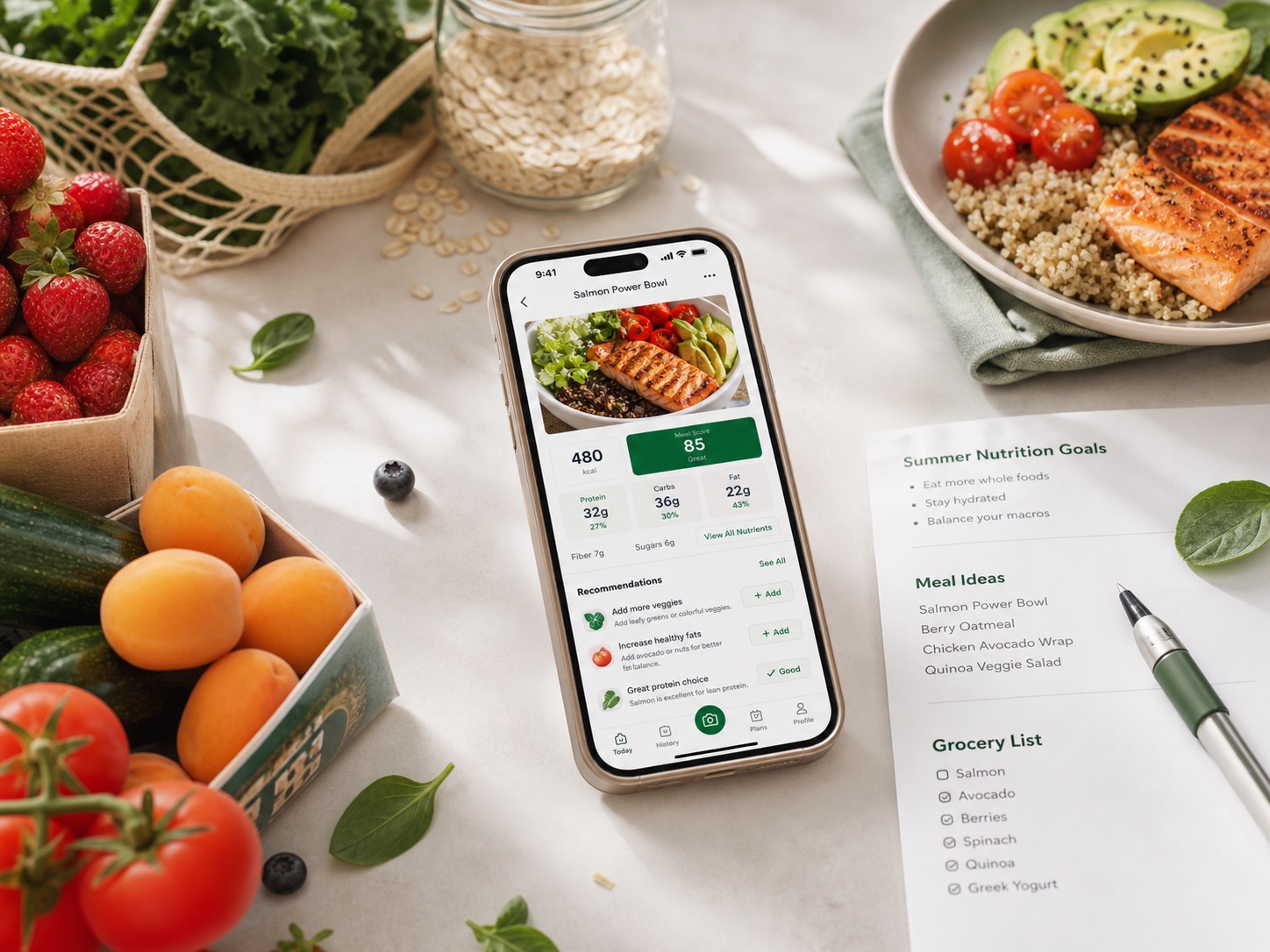
- For real meals, photo-based tracking still benefits from visible portions and short notes about oils, sauces, and hidden ingredients.
A half-cup of dry rolled oats (about 40g) delivers 150 calories, 5g of protein, 27g of carbs (4g fiber), 3g of fat, and 2.6g of beta-glucan fiber — the soluble fiber that earned oats an FDA-approved heart-health claim. Despite being a grain, oats fit into nearly every dietary pattern: Mediterranean, plant-based, low-glycemic, and even many ketogenic approaches when portions are managed.
This guide pulls all values from USDA FoodData Central (Avena sativa, rolled oats, raw, NDB 20073) and explains what those numbers mean for breakfast, recovery, and long-term cholesterol management.
Oats Nutrition Facts (per 100g, dry rolled oats)
| Nutrient | Amount | % Daily Value* |
|---|---|---|
| Calories | 379 kcal | 19% |
| Total Fat | 6.5 g | 8% |
| — Saturated Fat | 1.2 g | 6% |
| — Polyunsaturated Fat | 2.2 g | — |
| — Monounsaturated Fat | 2.3 g | — |
| Carbohydrates | 67.7 g | 22% |
| — Dietary Fiber | 10.1 g | 36% |
| — Beta-Glucan Fiber | 6.5 g | — |
| — Sugars | 0.8 g | — |
| Protein | 13.2 g | 26% |
| Iron | 4.3 mg | 24% |
| Magnesium | 177 mg | 42% |
| Phosphorus | 523 mg | 42% |
| Zinc | 3.6 mg | 33% |
| Manganese | 4.9 mg | 211% |
| Thiamine (B1) | 0.6 mg | 52% |
*Daily Values based on a 2,000-calorie reference diet (FDA). Individual needs vary.
For a standard serving of ½ cup dry oats (40g), divide these values by 2.5. For cooked oatmeal (prepared with water), the values drop by about 80% due to water absorption — 100g of cooked oats provides roughly 68 kcal, 2.5g protein, and 12g carbs.
Beta-Glucan and the FDA Cholesterol Claim
The most distinctive nutrient in oats is beta-glucan, a soluble fiber that exists almost nowhere else in grains. Per 100g of dry oats, you’re consuming 6.5g of beta-glucan — more than any other widely available food.
The FDA permits a health claim on oat products when they contain 3g or more of beta-glucan fiber per serving: “Soluble fiber from whole oats, as part of a low-fat diet, may help reduce the risk of heart disease” (21 CFR 101.81).
Multiple meta-analyses confirm this: a 2016 systematic review in Nutrition Reviews aggregating 28 randomized trials found that consuming 3–10g daily of oat beta-glucan reduced LDL cholesterol by 5–10% on average. For context, a 10 mg/dL drop in LDL correlates with roughly a 20% reduction in heart attack risk. This effect is strongest in people with baseline LDL above 200 mg/dL.
To hit the 3g threshold:
- ¾ cup dry rolled oats (30g) provides ~2g beta-glucan
- 1 cup dry rolled oats (40g) provides ~2.6g beta-glucan
- 1.5 cups dry rolled oats (60g) provides ~3.9g beta-glucan — achieves the FDA claim
The effect appears additive: eating oat beta-glucan daily for 4+ weeks yields a sustained LDL reduction; stopping reverses it within weeks. The mechanism is viscosity — beta-glucan thickens chyme (partly digested food) in the small intestine, slowing fat and cholesterol reabsorption.
Rolled, Steel Cut, and Instant: Processing, Cooking, and Nutrition
All three come from the same grain (oat groats), but processing differs:
Rolled Oats
- Process: Groats steamed and flattened between rollers
- Cook time: 5–7 minutes
- Texture: Soft, creamy; best for oatmeal porridge
- Beta-glucan: ~6.5g per 100g (intact)
- Glycemic index: ~55 (low-glycemic)
Steel Cut Oats
- Process: Groats chopped into 2–3 pieces; not steamed beforehand
- Cook time: 25–30 minutes
- Texture: Chewy, nutty, firm bite
- Beta-glucan: ~6g per 100g (slightly lower due to loss during chopping, but negligible)
- Glycemic index: ~50–52 (slightly lower than rolled)
Instant Oats
- Process: Rolled, then further steamed and dried; pre-cooked
- Cook time: 1–2 minutes (just add hot water)
- Texture: Very soft, almost paste-like if over-stirred
- Beta-glucan: ~6.5g per 100g (intact but more exposed, speeds beta-glucan solubility)
- Glycemic index: ~66–70 (higher; sugar absorption faster due to partial pre-cooking)
Glycemic impact: If you pair instant oats with protein (eggs, Greek yogurt, whey) and fat (nut butter, coconut), the difference between instant and steel cut becomes negligible. Unsweetened instant oats eaten alone spike glucose; all other forms do the same if unsweetened.
Practical note: Steel cut’s lower glycemic index and slower digestion make it ideal for sustained breakfast energy and workout recovery. Instant’s convenience wins on busy mornings — the nutritional cost is minimal if you add protein and fat.
Oats and Gluten: Cross-Contamination and Celiac Disease
Oats themselves are gluten-free. Avena sativa contains no prolamin proteins that trigger celiac disease or non-celiac gluten sensitivity. However, cross-contamination during growing, harvesting, and processing is common.
Oats grown in adjacent fields to wheat, barley, or rye often absorb windblown grain. Shared mill equipment spreads gluten residue. Standard “regular” oats tested in labs often contain 20–200 ppm of gluten — well above the 20 ppm threshold for “certified gluten-free” labeling.
For celiac disease or non-celiac gluten sensitivity: purchase oats explicitly labeled “certified gluten-free” (bearing a GF certification symbol from NSF, CSA, or GFCO). These are grown, harvested, and milled in dedicated facilities or equipment.
For non-celiac individuals or low FODMAP diets: regular oats are fine. Oats are low in FODMAPs and don’t trigger IBS or gas in most people — the fiber increase from oats may initially cause bloating in people unaccustomed to soluble fiber, but this resolves in 1–2 weeks as the gut microbiome adapts.
Blood Sugar Impact and How to Eat Oats for Steady Glucose
Despite 67g of carbs per 100g, oats have a glycemic index of 55 (rolled) to 50 (steel cut) — the “low glycemic” range. This is because:
- Beta-glucan viscosity slows gastric emptying and sugar absorption
- High fiber (10g per 100g) blunts glucose spike
- Moderate protein (13g per 100g) provides satiety
However, pure oats alone raise blood glucose. In continuous glucose monitoring (CGM) studies, eating 50g (dry equivalent) of rolled oats with water produces a blood glucose rise of 20–40 mg/dL over 2 hours.
To flatten the curve:
- Add protein: 2 eggs, Greek yogurt, cottage cheese, or whey powder (20g+ protein per meal). Protein slows digestion and promotes satiety; 2–3 hours of steady energy instead of 1.5-hour spike-and-crash.
- Add fat: Nut butter (2 tbsp = 8g fat), chia/flax seeds, coconut oil (1 tbsp). Fat delays gastric emptying and reduces peak glucose by 15–25%.
- Eat last, not first: Place oats after vegetables or protein in a mixed meal. Eating glucose last (when stomach is already partially full) reduces absorption rate by ~20%.
- Pair with cinnamon: 1–2 tsp of ground cinnamon may further reduce glucose spikes by 5–10% (modest but measurable in short-term studies).
Example breakfast optimized for glucose:
- 40g rolled oats
- 200g Greek yogurt (20g protein)
- 2 tbsp almond butter (8g fat, 6g protein)
- ½ banana or ½ cup berries
- Cinnamon
- Total: ~360 kcal, 38g protein, 38g carbs, 12g fiber, 12g fat — sustained energy for 4+ hours.
When Oats Might Not Fit Your Diet
Celiac Disease or Gluten Cross-Contamination Sensitivity
Use only certified gluten-free oats; regular oats risk 20–100+ ppm gluten.
Calorie-Restricted Weight Loss
Oats are calorie-dense (379 kcal/100g). A standard bowl of oatmeal (60g dry oats + milk/toppings) easily reaches 400–500 kcal — over 20% of a 2,000-calorie diet. Portion control is essential; measured ½-cup servings (40g) are safer than eyeballed amounts.
Very Low-Carb or Ketogenic Diets
67g carbs per 100g of oats is incompatible with ketogenic strict targets (<20–30g daily). A single ½-cup serving of dry oats (40g) provides 27g carbs — most of a day’s allowance. Keto-adapted individuals may tolerate steel cut (lower GI) in small amounts, but oatmeal is not a keto staple.
Oxalate Sensitivity
Oats contain ~10–15 mg of oxalates per 100g (moderate level). People with oxalate-related kidney stones, hyperoxaluria, or vulvodynia may need to limit high-oxalate grains. Boiling oats in large volumes of water and discarding the water reduces oxalate by ~30%, but oats remain moderately high.
IBS or Acute Digestive Issues
The sudden introduction of 10g of dietary fiber can trigger bloating, gas, and cramping. If increasing oat intake, do so gradually over 1–2 weeks, and drink adequate water (2+ L daily) to allow the gut microbiome to adapt.
The Bottom Line
Per ½ cup dry rolled oats: ~150 calories, 5g protein, 4g fiber (including 2.6g beta-glucan), and a low glycemic index of ~55. The beta-glucan content is why the FDA permits a health claim for oat products: 3g daily reduces LDL cholesterol by 5–10% when eaten consistently. Steel cut and rolled oats deliver equivalent nutrition; instant oats do the same but cook faster and spike glucose slightly quicker. All three retain their beta-glucan unless heavily processed. The only real constraints: celiac disease (use certified GF oats), calorie-restricted diets (measure portions), and very low-carb plans (oats are too high in carbs). For most people, 1–1.5 cups of dry oats daily fits comfortably into balanced nutrition and supports sustained energy, satiety, and cardiovascular health.
Frequently asked questions
How many calories are in oatmeal?
Dry rolled oats contain 379 kcal per 100g. Cooked oatmeal (with water or milk) is roughly 71 kcal per 100g due to water absorption. One serving of dry rolled oats (½ cup / ~40g) provides about 150 kcal and 5g of protein.
What is beta-glucan, and why does it matter?
Beta-glucan is a soluble fiber unique to oats. Per 100g of dry oats, you get roughly 6.5g of beta-glucan. The FDA recognizes that 3g daily of oat beta-glucan can reduce LDL cholesterol by 5–10% when part of a heart-healthy diet (21 CFR 101.81).
What's the difference between rolled oats, steel cut, and instant?
Rolled oats are steamed and flattened; steel cut are chopped oat groats; instant are more finely processed. Glycemic impact is similar, but steel cut cook slower (30 min) than rolled (5 min) and instant (1 min). All retain beta-glucan unless heavily processed.
Is oatmeal good for weight loss?
Oats are calorie-dense (379 kcal/100g dry) but their fiber and protein promote satiety. Studies show that eating oat-based breakfasts reduces hunger throughout the day. Keep portions to ½–¾ cup dry oats and pair with protein or fat to prevent blood sugar spikes.
Can people with celiac eat oats?
Pure, uncontaminated oats are gluten-free and tolerated by most celiacs. However, oats grown near wheat or in shared facilities often contain gluten from cross-contamination. Look for certified gluten-free oats (labeled GF) if celiac disease is a concern.