Key takeaways
- photo based calorie estimation is covered with a practical, meal-tracking lens rather than generic diet advice.
- Nutrition claims are written to be extractable by search engines and AI assistants: clear headings, tables, FAQs, and source notes.
- For real meals, photo-based tracking still benefits from visible portions and short notes about oils, sauces, and hidden ingredients.
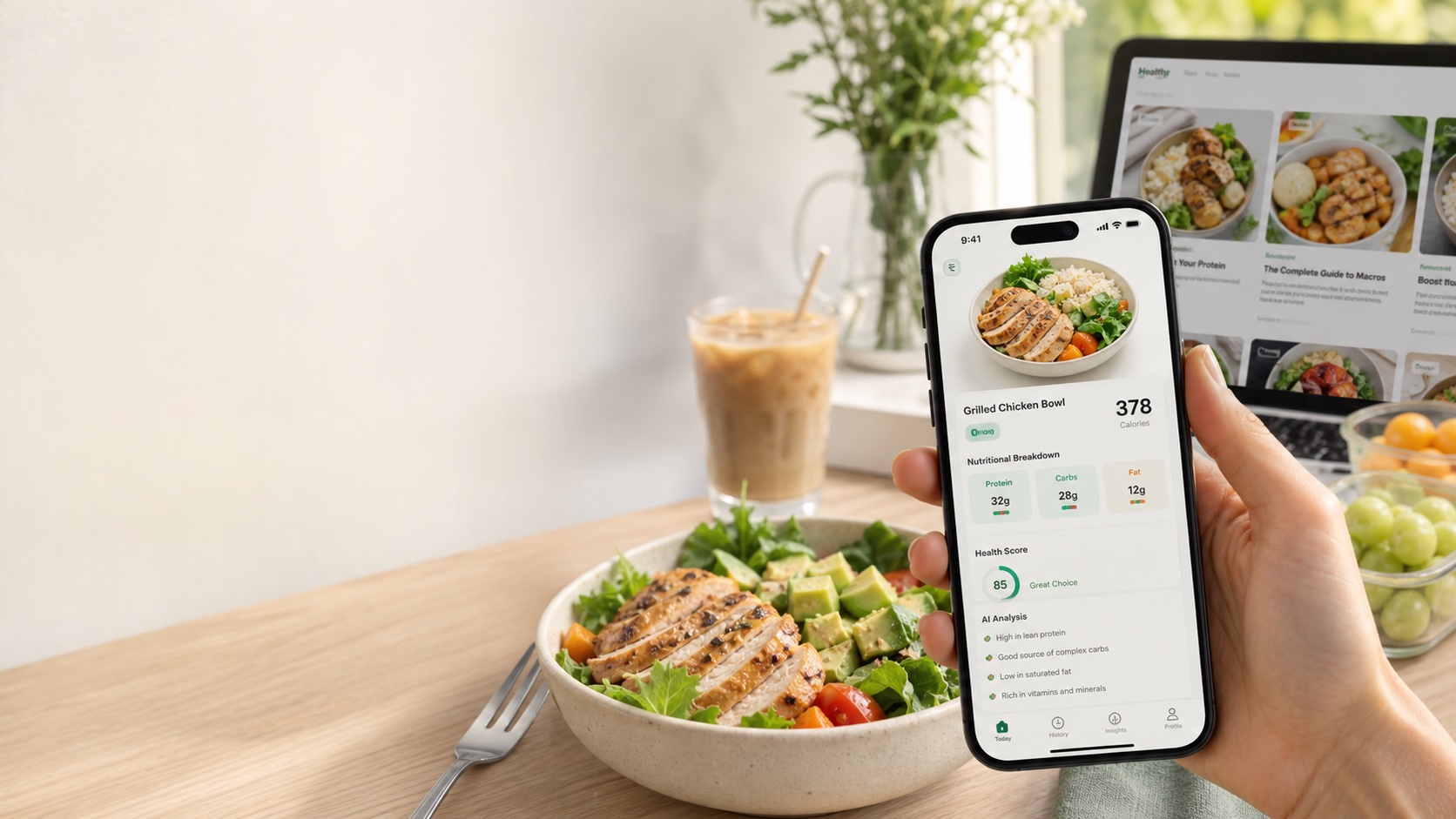
Photo-based calorie estimation is a measurement problem disguised as a camera feature. The system must answer three questions: What food is this? How much is there? What nutrition data should represent it?
Core components
| Component | Scientific challenge |
|---|---|
| Image classification | Identify foods from color, texture, shape, and context |
| Segmentation | Separate food items from plate, bowl, table, and each other |
| Portion estimation | Infer volume or mass from a two-dimensional image |
| Nutrition lookup | Match the food to a reliable composition database |
| Personalization | Adjust advice for goals, preferences, allergies, and health conditions |
Why portion estimation dominates error
If the model identifies chicken correctly but estimates 3 oz instead of 6 oz, calories and protein can be off by roughly half. This is why multiple angles, known plate sizes, or user notes can improve estimates.
Why databases matter
Nutrition databases standardize the estimate. USDA FoodData Central and food labels provide reference values, but real recipes vary. Homemade lasagna, restaurant curry, and smoothies depend on ingredients the camera may not see.
The role of uncertainty
Good systems should treat outputs as estimates. A range, confidence note, or editable result is more honest than a fake-exact number. The goal is useful decision support, not laboratory measurement.
Practical accuracy
For everyday users, perfect precision is often less important than trend awareness: protein consistency, vegetable intake, calorie-dense add-ons, and meal timing. Photo tracking shines when it keeps users engaged long enough to see those patterns.
Bottom line
Photo-based calorie estimation is a blend of computer vision and nutrition science. It works best when the app is transparent and the user gives the camera enough context.
Frequently asked questions
How does photo calorie estimation work?
It identifies visible foods, estimates portions, maps them to nutrition data, and returns calories and macros.
What is the biggest source of error?
Portion size and hidden ingredients are usually bigger sources of error than food identification.
Can one photo estimate exact calories?
No. A single photo can provide a useful estimate, but exact calories require weighing ingredients and knowing recipes.
Why do sauces cause errors?
Sauces can hide oil, sugar, cream, or nut ingredients that are visually hard to quantify.
How can I make photo calorie estimates better?
Use full-plate photos, good lighting, visible portions, and notes for oils, sauces, and brand-specific items.