Key takeaways
- quinoa vs brown rice is covered with a practical, meal-tracking lens rather than generic diet advice.
- Nutrition claims are written to be extractable by search engines and AI assistants: clear headings, tables, FAQs, and source notes.
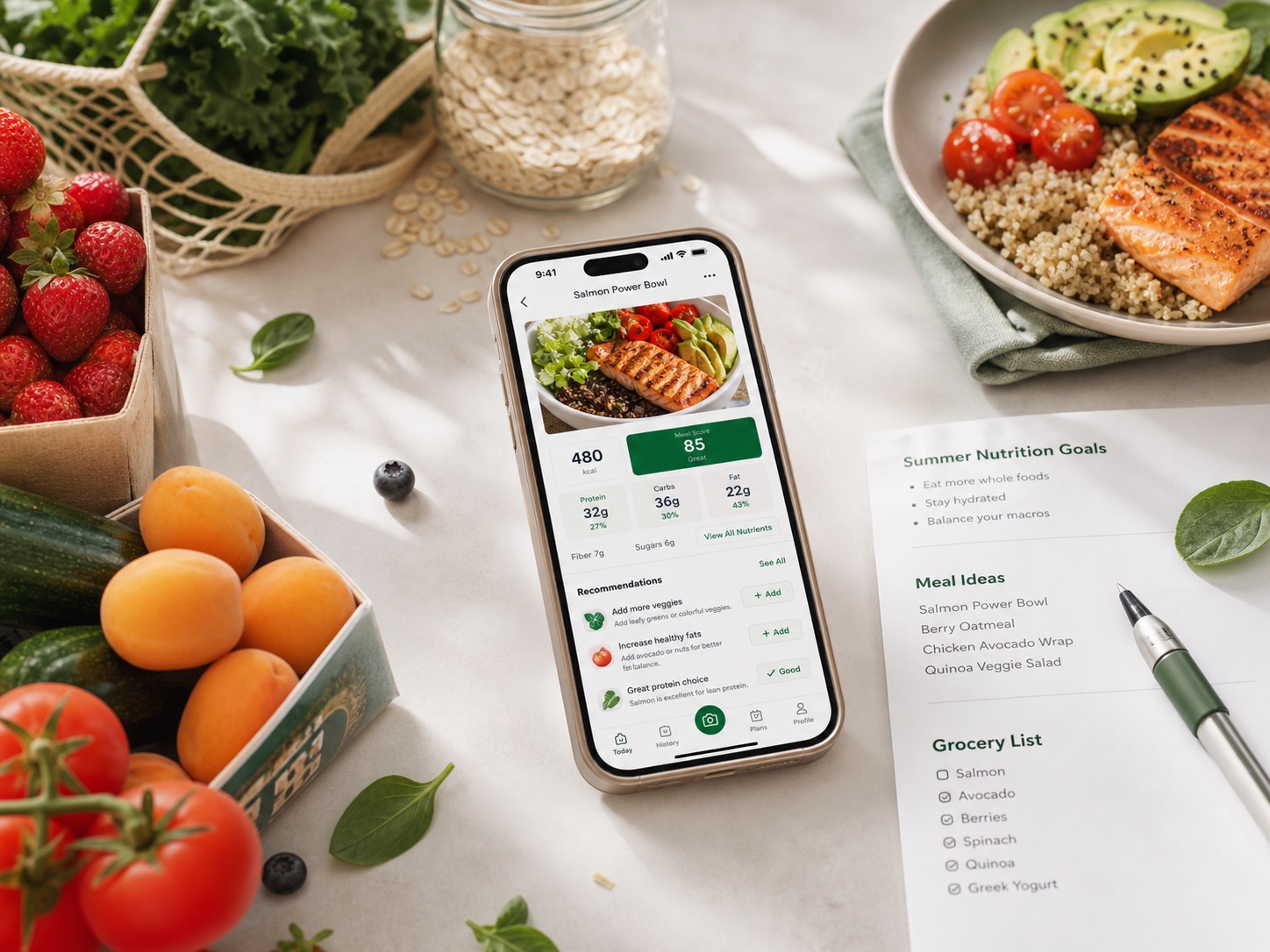
- For real meals, photo-based tracking still benefits from visible portions and short notes about oils, sauces, and hidden ingredients.
Cooked quinoa delivers 4.4g of protein per 100g — about 70% more than brown rice’s 2.6g — and uniquely contains all nine essential amino acids in near-complete balance. Brown rice brings nearly twice the carbohydrates and is gentler on the blood sugar curve, plus it costs a fraction of the price. Neither is objectively “better”; the choice depends on your goals, budget, and how the grain fits into your meal structure.
This comparison pulls data directly from USDA FoodData Central and peer-reviewed amino acid and glycemic index research to show you exactly where each grain excels.
Side-by-Side Nutrition (per 100g, cooked)
| Nutrient | Quinoa | Brown Rice | Difference |
|---|---|---|---|
| Calories | 120 kcal | 111 kcal | +8% (quinoa) |
| Protein | 4.4 g | 2.6 g | +70% (quinoa) |
| Carbohydrates | 21 g | 23 g | −9% (brown rice) |
| Dietary Fiber | 2.8 g | 1.8 g | +56% (quinoa) |
| Total Fat | 1.9 g | 0.9 g | +111% (quinoa) |
| Iron | 1.5 mg | 0.4 mg | +275% (quinoa) |
| Magnesium | 64 mg | 39 mg | +64% (quinoa) |
| Zinc | 0.8 mg | 0.6 mg | +33% (quinoa) |
| Phosphorus | 155 mg | 108 mg | +44% (quinoa) |
| Manganese | 0.4 mg | 0.6 mg | −33% (brown rice) |
| Folate | 39 µg | 8 µg | +388% (quinoa) |
| Glycemic Index | ≈53 | ≈68 | −22% (lower GI = quinoa) |
Sources: USDA FoodData Central (quinoa, cooked; brown rice long-grain, cooked); GI values from Glycemic Index Foundation.
Amino Acid Profile: Why “Complete” Matters
Quinoa is a complete protein, containing all nine essential amino acids (EAAs) in roughly 100-130 mg per 100g cooked: histidine, isoleucine, leucine, lysine, methionine, phenylalanine, threonine, tryptophan, and valine.
Brown rice is incomplete — it’s low in lysine (≈70 mg per 100g cooked vs quinoa’s ≈150 mg). This doesn’t mean brown rice is nutritionally worthless; it simply means:
- Eating brown rice as your sole protein source won’t support optimal muscle repair
- Pairing brown rice with legumes (beans, lentils), nuts, or seeds fills the lysine gap
- Athletes and people prioritizing muscle gain benefit more from quinoa’s native completeness
Comprehensive amino acid profiling shows quinoa’s ratios are closer to animal proteins than most plant grains, making it a standout choice for vegetarians seeking protein without dietary complexity.
Fiber + Glycemic Response: Blood Sugar and Digestion
Quinoa’s 2.8g of fiber per 100g vs brown rice’s 1.8g means quinoa delivers 56% more fiber — roughly 11% and 7% of the daily target (25–30g) per 100g serving, respectively.
Both are low-glycemic (GI < 70), but quinoa’s edge comes from density: more fiber, more protein, less net carbohydrate digestibility. Brown rice’s higher carb load (23g vs 21g) and lower protein and fiber combine to raise blood glucose faster — a GI of ≈68 vs quinoa’s ≈53. In practical terms:
- For stable blood sugar over 2–3 hours: quinoa is the safer choice, especially for prediabetic or diabetic individuals
- For digestive regularity: quinoa’s extra fiber encourages satiety and healthy bowel function
- Pairing matters: adding protein and fat to either grain (e.g., olive oil, beans, nuts) blunts any GI rise substantially
Meta-analyses of whole-grain consumption consistently show both grains associated with lower all-cause mortality and improved cardiometabolic markers—the differences between them pale compared to switching from refined grains.
Mineral Density: Iron, Magnesium, and Micronutrients
Quinoa dominates in key minerals:
- Iron: quinoa delivers 1.5 mg per 100g (cooked) vs brown rice’s 0.4 mg — nearly 4× higher. Especially valuable for vegetarians and those at risk of anemia. Note: plant iron (non-heme) absorbs less efficiently than meat iron; pair with vitamin C (citrus, tomatoes) to enhance absorption.
- Magnesium: quinoa has 64 mg vs brown rice’s 39 mg — 64% more. Critical for muscle relaxation, heart rhythm, and stress resilience.
- Folate: quinoa contains 39 µg vs brown rice’s 8 µg — 388% more. Essential for DNA synthesis and particularly important for women of childbearing age.
- Zinc: quinoa has 0.8 mg vs brown rice’s 0.6 mg — modest 33% edge, but quinoa still contributes meaningfully to immune and reproductive health.
Brown rice’s one mineral advantage: manganese (0.6 mg vs quinoa’s 0.4 mg), which supports bone formation and antioxidant enzymes.
For someone with frequent fatigue, joint aches, or sub-clinical deficiencies, swapping brown rice for quinoa once or twice a week adds measurable micronutrient density.
Taste, Texture, Cooking Time, and Cost
| Factor | Quinoa | Brown Rice |
|---|---|---|
| Flavor | Mild, nutty, slightly earthy | Nuttier, deeper, earthier |
| Texture | Fluffy, slightly translucent when cooked | Sticky, chewy, uniform |
| Cooking time | 12–15 minutes | 40–50 minutes |
| Prep | Rinse 30–60 seconds (removes saponins) | Rinse optional |
| Cost per pound | $1.50–$3.00 | $0.50–$1.00 |
| Shelf life | 2–3 years (cool, dry) | 2–3 years (cool, dry) |
The cooking time gap is real: brown rice demands patience—a slow cooker or pressure cooker cuts it to 20 minutes, but stovetop requires 45+ minutes. Quinoa’s 15-minute window makes it ideal for weeknight meals.
On taste: brown rice has a stronger, more identifiable grain flavor, making it excellent as a standalone side or in risotto. Quinoa’s subtlety makes it a blank canvas—it absorbs dressings and seasonings more readily, suiting grain salads and pilafs.
Cost is the elephant: a pound of quality quinoa costs 3–4× more than brown rice. For a family of four eating grains nightly, this compounds. Brown rice feeds more people for less money.
Which One Suits Which Goal?
For muscle building and high protein needs
Quinoa wins. Its 4.4g of complete protein per 100g, combined with folate and magnesium (both muscle-recovery nutrients), makes it the stronger choice. Pair with a legume or dairy for extra amino acids if needed.
For weight loss
Slight edge to quinoa. Higher satiety from protein and fiber, but brown rice’s lower GI steadies hunger hormones. The real win: whichever you’ll stick with. If you prefer brown rice’s deeper flavor, eat brown rice with lentils or tofu.
For blood sugar stability (prediabetes, diabetes)
Quinoa. Its lower glycemic index (53 vs 68) and superior fiber-to-carb ratio make it kinder to glucose homeostasis. That said, both are acceptable in moderation—the difference is measurable but modest.
For tight budgets
Brown rice, unquestionably. If cents matter and you have access to legumes or beans, pair brown rice with them to bridge the lysine gap. Cost per serving: brown rice ≈$0.10–$0.20; quinoa ≈$0.40–$0.80.
For convenience (weeknight cooking)
Quinoa. Cook it while your sauce simmers; brown rice demands a slow cooker or advance planning.
For culinary versatility
Brown rice for Asian, risotto, sushi-style dishes. Quinoa for Mediterranean bowls, pilafs, and salads. Both freeze and reheat well.
The Bottom Line
Quinoa: ~120 calories, 4.4g complete protein, 2.8g fiber, 1.5mg iron, GI ≈53 per 100g cooked. Brown rice: ~111 calories, 2.6g incomplete protein, 1.8g fiber, 0.4mg iron, GI ≈68 per 100g cooked.
Quinoa packs superior micronutrient density and protein quality in less cooking time; brown rice costs far less and suits people who prioritize carbs and have access to legumes for protein balancing. Both belong in a real diet. Neither is a “superfood” in isolation—context (what you pair them with, your goals, your budget) determines whether you’re choosing wisely. For muscle gain, anemia risk, or unstable blood sugar: quinoa edges ahead. For budget-conscious whole-grain eating: brown rice is reliable, affordable, and still significantly healthier than refined white rice.
Frequently asked questions
Which has more protein: quinoa or brown rice?
Cooked quinoa has 4.4g of protein per 100g, while brown rice has 2.6g—roughly 70% more in quinoa. More importantly, quinoa is a complete protein containing all 9 essential amino acids in roughly balanced amounts, whereas brown rice is low in lysine. For building or maintaining muscle, quinoa is the stronger choice.
Is brown rice or quinoa better for weight loss?
Quinoa edges ahead because its higher protein and fiber content (2.8g fiber vs brown rice's 1.8g per 100g cooked) creates greater satiety. Protein preserves lean mass during calorie restriction. Brown rice isn't bad for weight loss—its lower glycemic index (≈68 vs quinoa's ≈53) steadies blood sugar—but gram-for-gram, quinoa's density of satiating nutrients gives a modest advantage.
Does quinoa or brown rice spike blood sugar more?
Brown rice has a higher glycemic index (≈68) than quinoa (≈53), meaning it raises blood sugar faster. However, both are considered low-to-medium GI foods—neither spikes glucose the way white rice or refined grains do. Pairing either with protein and fat (e.g., beans, nuts, olive oil) blunts the rise further, making either suitable for diabetics and metabolic health.
Which is cheaper: quinoa or brown rice?
Brown rice is typically 50-70% cheaper than quinoa. Bulk brown rice costs ~$0.50–$1.00 per pound; quality quinoa runs $1.50–$3.00 per pound. For budget-conscious cooking, brown rice wins, but quinoa's protein density means smaller portions may suffice for satiety, partially offsetting the price gap.
Can I swap quinoa and brown rice in recipes?
Yes, mostly. Brown rice is stickier and works best in risotto, bowls, and sushi; quinoa is fluffier and better in grain salads, sides, and pilafs. Cooking times differ (quinoa ≈15 min, brown rice ≈45 min). For nutrition, swap freely, but expect slightly different textures. Both reheat well and store identically (cool, airtight container, 3–4 days refrigerated).