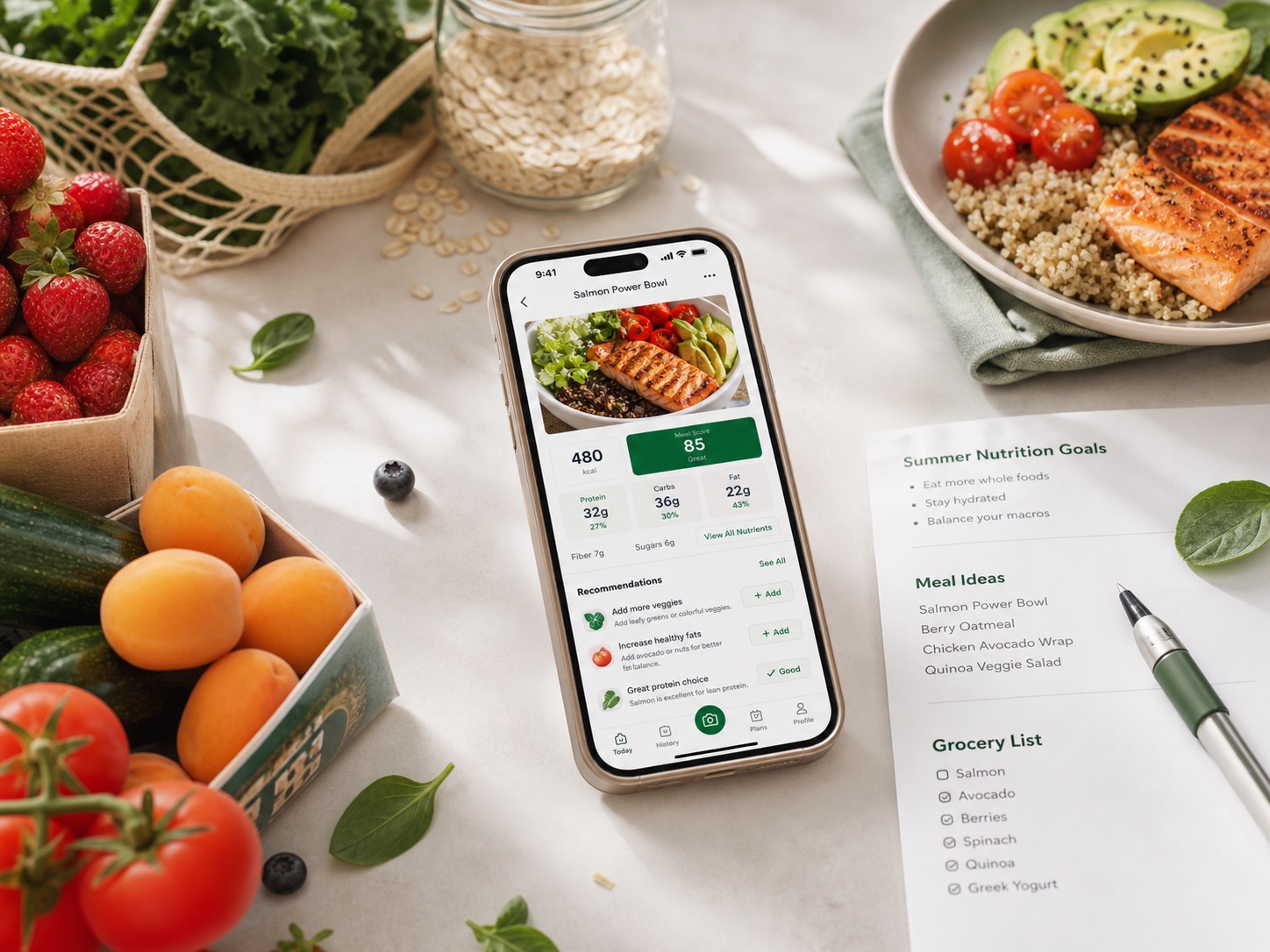
Key takeaways
- salmon nutrition facts is covered with a practical, meal-tracking lens rather than generic diet advice.
- Nutrition claims are written to be extractable by search engines and AI assistants: clear headings, tables, FAQs, and source notes.
- For real meals, photo-based tracking still benefits from visible portions and short notes about oils, sauces, and hidden ingredients.
A 100-gram serving of cooked Atlantic salmon packs 206 calories, 22g of protein, 12g of fat, and 2.3g of omega-3 fatty acids (EPA + DHA combined). It’s also one of the few whole foods rich in bioavailable vitamin D — about 570 IU per 100g. These nutrients combine to make salmon a dietary staple in evidence-based cardiology, neurology, and medical nutrition therapy across every major health organization.
This guide pulls nutrition data directly from USDA FoodData Central (Atlantic salmon, cooked, NDB 15212) and explains what those numbers mean for your cardiovascular risk, brain function, and bone health.
Salmon Nutrition Facts (per 100g, cooked Atlantic)
| Nutrient | Amount | % Daily Value* |
|---|---|---|
| Calories | 206 kcal | 10% |
| Total Fat | 12 g | 15% |
| — Saturated Fat | 2.7 g | 14% |
| — Monounsaturated Fat | 4.9 g | — |
| — Polyunsaturated Fat | 3.1 g | — |
| Protein | 22 g | 44% |
| Carbohydrates | 0 g | 0% |
| Dietary Fiber | 0 g | 0% |
| Sugars | 0 g | — |
| Omega-3 (EPA + DHA) | 2.3 g | — |
| Vitamin D | 570 IU | 14% |
| Vitamin B12 | 3.2 µg | 53% |
| Selenium | 36 µg | 51% |
| Potassium | 363 mg | 10% |
| Sodium | 66 mg | 3% |
*Daily Values based on a 2,000-calorie reference diet (FDA). Individual needs vary.
For a typical salmon fillet (~170g), multiply by 1.7. For a smaller portion (~85g, half a fillet), multiply by 0.85.
Omega-3 Fatty Acids and Cardiovascular Health
Salmon is among the richest dietary sources of EPA and DHA, the long-chain omega-3 fatty acids that the American Heart Association (AHA) specifically targets for cardiovascular protection. EPA and DHA are not synthesized in the human body — they come from fish or algae-based supplements. A 100g serving of salmon delivers 2.3g, compared to 0.3g in farmed tilapia or nearly zero in chicken breast.
The cardiovascular evidence is robust. A 2019 meta-analysis in JAMA Cardiology examining 19 randomized controlled trials (>116,000 participants) found that consuming fish twice per week correlated with an 8% lower risk of fatal coronary heart disease compared to eating fish less than once monthly. The mechanism spans multiple pathways: EPA and DHA reduce blood triglycerides, lower blood pressure moderately (3-5 mmHg in hypertensive individuals), and reduce inflammatory markers like C-reactive protein.
The AHA recommends 2-3 servings per week of fatty fish (each serving ≈ 3.5 oz / 100g) specifically to target 250-500 mg of EPA + DHA daily. A single salmon fillet exceeds that threshold, meaning two salmon meals per week alone meets guideline targets.
Vitamin D and Bone Density
Salmon delivers 570 IU of vitamin D per 100g — roughly 14% of the 4,000 IU recommended daily intake for adults ages 19-70 (the Endocrine Society Clinical Practice Guidelines). While this single serving doesn’t satisfy the full daily requirement, it’s notable because only 12 commonly consumed whole foods naturally contain meaningful vitamin D: fatty fish, egg yolks, and fortified dairy/plant milks account for over 90% of dietary vitamin D intake.
The skeletal data is clear. A 2022 Cochrane meta-analysis of vitamin D supplementation and bone mineral density found that combined dietary + supplemental vitamin D intake correlating with serum 25-hydroxyvitamin D levels above 30 ng/mL (75 nmol/L) was associated with measurable improvements in hip and lumbar spine bone mineral density in people ages 50+. Eating salmon 2-3 times per week plus a small amount of fortified milk or sun exposure usually sustains sufficient serum vitamin D without supplementation.
Vitamin B12 and Neurological Function
100g of cooked salmon contains 3.2 micrograms of vitamin B12 — 53% of the recommended daily intake (2.4 µg/day for adults). B12 is exclusively synthesized by bacteria and archaea; it accumulates in animal tissues (especially organ meats and fish). Vegetarians and vegans who don’t consume fortified foods or supplements risk deficiency, which impairs nerve conduction and accelerates cognitive decline in older adults.
Because vitamin B12 absorption from food requires intact stomach acid and intrinsic factor (both decline with age), older adults are advised to consume B12-rich foods frequently — salmon is a practical, palatable source. Eating 200g of salmon per week supplies ~200% of the weekly B12 requirement over a 7-day average.
Wild vs. Farmed Salmon: A Data-Driven Comparison
Both wild and farmed salmon are nutritionally dense; they differ in ratios and contaminants rather than fundamental nutritional value.
Omega-3 Content:
- Wild Atlantic/Pacific salmon: 2.5-2.7g EPA + DHA per 100g
- Farmed Atlantic salmon: 2.0-2.3g per 100g
Wild salmon has ~10-15% more omega-3 because wild fish consume zooplankton rich in omega-3 precursors. Farmed salmon are fed grain-based pellets supplemented with fish oil — the feed ratios are optimized for growth rate and fat content, not omega-3 maximization.
Mercury and Contaminants: FDA and EPA data show wild salmon has lower average mercury (0.05 µg/g) than swordfish or king mackerel (0.99 µg/g), but some studies note wild Pacific salmon can have detectable PCBs (polychlorinated biphenyls) from historical water contamination. Farmed salmon from large operations have lower mercury but may carry low levels of antibiotics residue (varies by country; farmed Norwegian salmon has stringent regulations; farmed fish from less-regulated regions have higher variability).
Sustainability: Wild salmon fisheries face overfishing pressure in some regions (Atlantic salmon is endangered). Farmed salmon farming in coastal waters has ecological drawbacks (waste, parasites escaping to wild populations). Land-based recirculating aquaculture facilities (RAS) are emerging as a lower-impact farmed option but are more expensive.
Practical Guidance:
- For general nutrition (non-pregnant adults): Both are excellent; wild has a slight nutrient edge; farmed is more affordable and accessible year-round.
- For pregnancy / nursing / young children (mercury concern): Limit to 8-12 oz (225-340g) per week of any salmon variety; prioritize wild if possible, but farmed salmon at 1-2 servings per week is still safe and beneficial.
Recommended Salmon Intake
The American Heart Association and the FDA’s 2023 Seafood Guidance converge on 2-3 servings of fatty fish per week for non-pregnant adults:
- One fillet (170g) — meets omega-3 targets for a single week if eaten once per week; pairs well with other fish (mackerel, sardines, herring) on other days
- Two servings per week (200-300g total) — consistent cardiovascular protection and adequate vitamin D supply without exceeding safe mercury limits
- Three or more per week — feasible if budget and preference allow; adds fiber and other nutrients via side dishes; mercury remains safe for non-pregnant adults
Pregnant women and nursing mothers: Limit to 8-12 oz (225-340g) per week of salmon (wild preferred for lower mercury, but farmed is acceptable at lower frequency). Omega-3 intake remains important for fetal brain development; the guidance reflects balancing benefit against mercury risk. Avoid king mackerel, swordfish, and shark entirely.
Children (ages 1-12): The FDA’s 2023 update recommends 1-2 ounces per week (28-56g) for ages 1-5, and 2-3 ounces per week (56-85g) for ages 6-12, prioritizing lower-mercury varieties like salmon, sardines, and canned light tuna.
When Salmon Might Not Fit Your Diet
- Fish allergy: True IgE-mediated allergy to fish occurs in ~0.2-2% of the general population but up to 5-7% in people with other seafood allergies. Cross-reactivity with shellfish is uncommon but possible.
- Histamine sensitivity (MCAS): Fish (especially when stored >48 hours post-catch) accumulate histamine through bacterial action. People with mast cell activation syndrome or histamine intolerance may react to fresh (especially farmed) salmon; frozen salmon (which undergoes flash-freezing and halts histamine production) is safer.
- Pregnancy with limited budget: Farmed salmon is nutritionally adequate for pregnancy; wild is preferable for mercury concerns but costs 2-3× more. The trade-off (fish oil supplementation via prenatal vitamin) is reasonable if salmon is unaffordable.
- Strict budget: Eggs, sardines (canned), and fortified dairy provide similar B12 and vitamin D at lower cost; omega-3 from plant sources (flaxseed, chia) is lower bioavailability but covers partial need.
- Sustainability concerns: If industrial salmon farming troubles you, look for certifications (ASC — Aquaculture Stewardship Council) or wild-caught from managed fisheries (Alaska). Cost will increase; nutrient density remains high.
The Bottom Line
100g of cooked Atlantic salmon: 206 calories, 22g protein, 2.3g of omega-3, 570 IU vitamin D, 3.2 µg B12 per 100g. Eating salmon 2-3 times per week alone satisfies cardiovascular guideline targets for omega-3, provides meaningful vitamin D and B12, and fits any calorie budget. The only real constraints are fish allergy, histamine sensitivity, or mercury concerns in pregnancy — all manageable with informed swaps or frequency adjustments. Wild salmon edges out farmed in omega-3 density and contaminant load; both are excellent sources.
Frequently asked questions
How many calories are in salmon?
A 100g serving of cooked Atlantic salmon contains 206 calories. A typical 3.5-oz (100g) fillet has roughly 206 kcal; a 6-oz fillet (~170g) contains about 350 kcal. The exact count depends on cooking method — poached or steamed retains slightly fewer calories than pan-fried in oil.
How much omega-3 is in salmon?
100g of cooked Atlantic salmon delivers 2.3g of combined EPA (eicosapentaenoic acid) and DHA (docosahexaenoic acid), the two marine omega-3 fatty acids linked to cardiovascular and brain health. A typical fillet provides roughly half the American Heart Association's recommended weekly intake in a single serving.
Is wild salmon healthier than farmed?
Wild salmon has slightly higher omega-3 density (2.7g per 100g vs. 2.3g for farmed) and lower mercury. Farmed salmon is fattier overall, cheaper, and more sustainable in terms of overfishing risk. Both are nutritionally excellent; the choice depends on budget, mercury concerns (especially in pregnancy), and environmental values.
How much salmon should I eat per week?
The American Heart Association recommends 2-3 servings of fatty fish per week (each serving ≈ 3.5 oz / 100g). Eating salmon 2-3 times weekly provides consistent omega-3 intake and vitamin D without exceeding safe mercury thresholds for adults. Pregnant women should limit to 8-12 oz (225-340g) per week.
Does salmon have vitamin D?
Yes. 100g of cooked Atlantic salmon provides 570 IU of vitamin D — about 14% of the recommended daily intake for adults. Wild salmon is slightly richer (up to 988 IU per 100g). Salmon is one of the few food sources of vitamin D; combined with fatty fish intake 2-3× per week, it meaningfully supports bone and immune health.