Key takeaways
- salmon vs tuna is covered with a practical, meal-tracking lens rather than generic diet advice.
- Nutrition claims are written to be extractable by search engines and AI assistants: clear headings, tables, FAQs, and source notes.
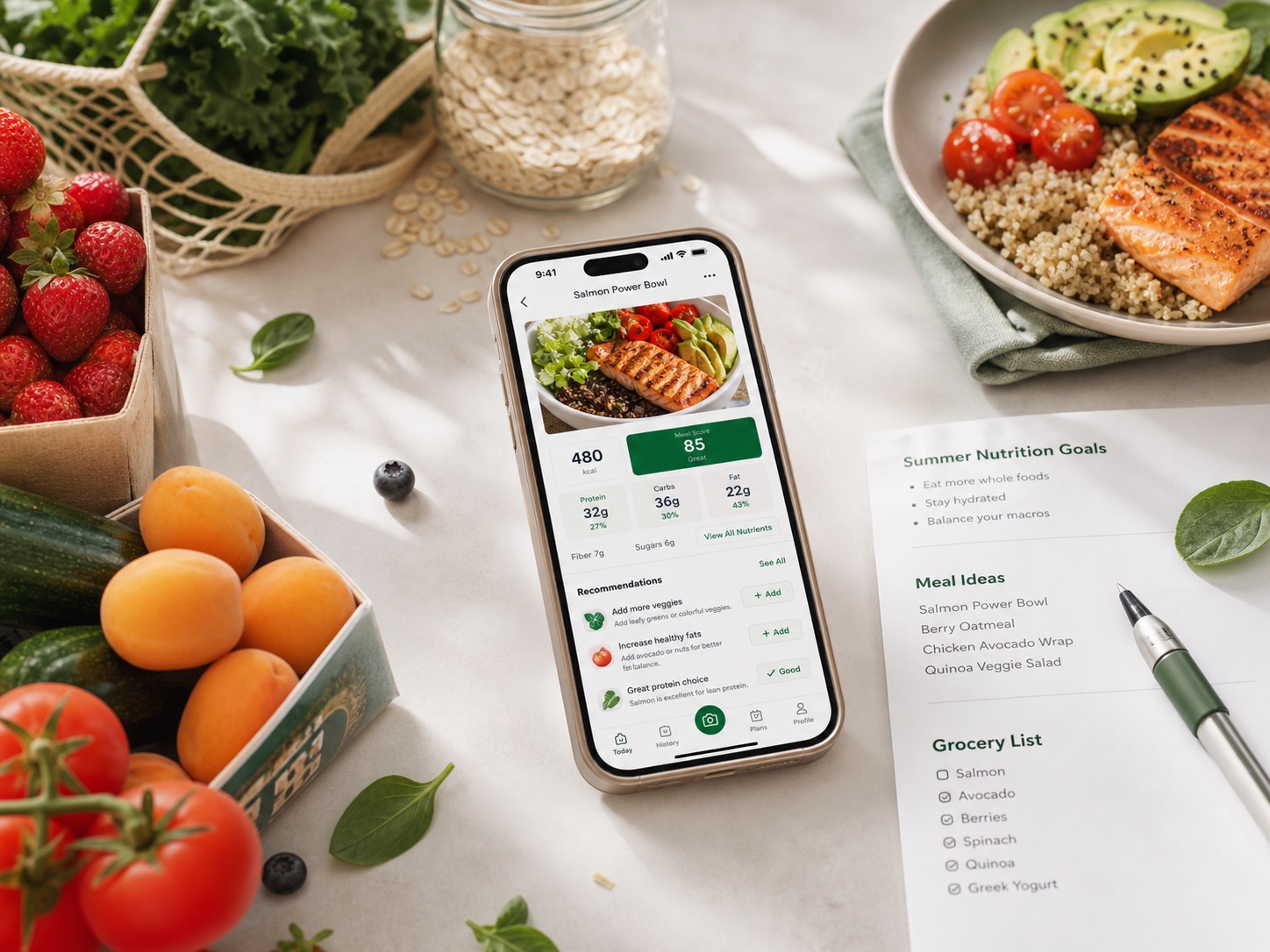
- For real meals, photo-based tracking still benefits from visible portions and short notes about oils, sauces, and hidden ingredients.
Atlantic salmon has 2.3g of omega-3 fatty acids (EPA and DHA combined) per 100g of cooked fillet. Light canned tuna in water has 0.27g. That makes salmon roughly 7 times richer in the omega-3s that protect your heart and brain — a difference substantial enough to reshape your fish-buying decisions once you see the numbers.
Both are staple sources of lean protein, B vitamins, and minerals. But they excel in different ways: salmon dominates omega-3 and vitamin D; tuna leans toward purity of protein-per-calorie and mercury safety. This guide pulls data from the USDA FoodData Central, FDA mercury database, and American Heart Association guidance to help you choose.
Side-by-Side Nutrition (per 100g, cooked)
| Nutrient | Atlantic Salmon | Light Tuna (canned, water) | Albacore Tuna (canned, water) |
|---|---|---|---|
| Calories | 206 kcal | 99 kcal | 128 kcal |
| Protein | 22 g | 22 g | 23 g |
| Total Fat | 12 g | 0.7 g | 3 g |
| Omega-3 (EPA+DHA) | 2.3 g | 0.27 g | 0.7 g |
| Vitamin D | 526 IU | 80 IU | 130 IU |
| Vitamin B12 | 2.6 µg | 2.5 µg | 2.2 µg |
| Selenium | 36 µg | 52 µg | 52 µg |
| Mercury | ~0.022 ppm | ~0.126 ppm | ~0.35 ppm |
Salmon and tuna data from USDA FoodData Central; mercury data from FDA fish monitoring program. 1 ppm = 1 part per million (µg/g).
Omega-3 Showdown: Salmon Wins by a Landslide
The most striking difference is omega-3 fatty acid content — specifically EPA (eicosapentaenoic acid) and DHA (docosahexaenoic acid).
Salmon: A 100g cooked fillet delivers 2.3g of EPA+DHA. The American Heart Association recommends 1–2g per week for heart health. One salmon serving covers nearly half your weekly target in a single meal.
Light tuna: 0.27g per 100g. You’d need to eat roughly 370g of light tuna to match one 100g salmon fillet’s omega-3 content.
Albacore tuna: 0.7g per 100g — a middle ground. Still only 30% of what salmon provides.
EPA and DHA are precursors to anti-inflammatory signaling molecules (eicosanoids). They reduce triglycerides, support brain development in infants, and correlate with lower rates of sudden cardiac death in observational studies (JAMA, 2003; He et al.). If your primary goal is meeting omega-3 targets, salmon is non-negotiable. Tuna can complement a diet rich in other omega-3 sources (walnuts, flaxseed, anchovies), but it cannot stand alone.
Protein: Tuna Edges Out Salmon (Per Calorie)
Both deliver 22–23g of protein per 100g — roughly equivalent in absolute terms.
But when you account for calories:
- Light tuna: 22g protein in 99 kcal = 0.22g protein per calorie
- Salmon: 22g protein in 206 kcal = 0.11g protein per calorie
Tuna is the leaner choice. If you’re on a strict calorie budget or body-building on a cut, tuna delivers more protein without the fat burden. For most people eating at maintenance or surplus, the trade-off isn’t meaningful — you’re trading 107 calories for 2g of omega-3, a net health win.
Both are complete proteins (all nine essential amino acids); neither needs pairing with another protein source.
Mercury Concern: Tuna Carries a Real (But Manageable) Risk
The FDA publishes mercury levels in commercial fish. Salmon is one of the lowest-mercury options.
- Salmon: ~0.022 ppm (parts per million)
- Light canned tuna: ~0.126 ppm — roughly 6 times higher than salmon
- Albacore tuna: ~0.35 ppm — the highest of the three, and notably higher than light tuna
The FDA’s action level is 1.0 ppm, so all three are technically “safe.” However, mercury accumulates in your body. The EPA and FDA publish joint guidance (Eating Fish: What Pregnant Women and Parents Should Know) recommending:
- Pregnant women, nursing mothers, children aged 1–11: Limit to 12 oz (340g) per week of canned light tuna, or no more than 6 oz (170g) per week of albacore. Salmon is unrestricted in these groups — eat 2–3 servings per week if desired.
- Women of childbearing age and men: Up to 12 oz per week of canned light tuna is acceptable. Albacore should be rotated with lower-mercury species (salmon, canned light tuna, sardines, anchovies).
- General adult population: Eating fish 2–3 times per week from a mix of species is ideal. Rotating tuna with salmon and other low-mercury options minimizes risk.
For pregnant women specifically, salmon is the safer high-omega-3 fish — you get the EPA/DHA and avoid tuna’s mercury burden.
Pregnancy & Child Feeding: FDA Guidance
The FDA’s “Best Choices” for fish (2+ servings per week) include:
- Salmon (fresh, canned, frozen)
- Canned light tuna (in water)
- Anchovies, sardines, herring
The “Good Choices” list (1 serving per week) includes albacore tuna — explicitly limited because of mercury.
If you’re pregnant or feeding a young child, salmon is the go-to omega-3 fish. It provides omega-3s essential for fetal brain development without the mercury trade-off.
Canned vs. Fresh: Omega-3 Retention and Sodium
Canned salmon
Canning heats salmon to 250°F+ under pressure. This does not degrade EPA/DHA — the omega-3 bonds survive heat. Canned salmon retains ~2.0g omega-3 per 100g, matching fresh. The edible bones add bonus calcium (100–200 mg per serving) if you eat them.
Trade-off: Added sodium. A 3-oz can of canned salmon contains 300–400 mg sodium (13–17% of the 2,300 mg daily limit). Low-sodium brands exist (200 mg per can), and you can rinse canned fish to remove ~25% of sodium.
Canned tuna
Similarly, canning does not destroy omega-3 bonds. Canned light tuna retains ~0.25g omega-3 per 100g.
Advantage: Ultra-shelf-stable, lasts 3+ years, requires no cooking. Cost is 1/6th that of fresh salmon.
Disadvantage: Higher sodium than canned salmon (200–300 mg per 3-oz can); BPA lining in some older cans (modern cans use BPA-free liners, but verify the label).
Fresh salmon
Fresh salmon has 2.3g omega-3 per 100g uncooked (very slight loss when baked or poached, ~5–10% degradation at 350°F for 12–15 min). No added sodium. Costs 5–10 times more than canned light tuna.
Ideal scenario: Buy fresh or frozen salmon when budget allows (once or twice weekly). Rotate with canned light tuna and other low-mercury fish for meals in between. This balances omega-3 intake, mercury exposure, and budget.
Price Comparison
- Canned light tuna: $0.80–$1.50 per 3–5 oz can. Equivalent to $16–$30 per pound cooked product. Pantry-stable indefinitely.
- Canned salmon: $2.00–$4.00 per 3–5 oz can. Equivalent to $40–$80 per pound. Often 2–3x the cost of light tuna, but still a fraction of fresh.
- Fresh salmon fillets: $12–$20 per pound. Frozen salmon is similar ($10–$18/lb). Requires cooking today or within 1–2 days of purchase.
For households on tight budgets, canned light tuna is unbeatable value — but if your goal is omega-3 intake (and you can spend more), the cost-per-gram-omega-3 calculus favors fresh or canned salmon despite the higher price tag.
Which One Should You Pick?
Pick salmon if:
- You’re pregnant or nursing — omega-3 is crucial for fetal and infant brain development, and mercury risk is real with tuna
- You want maximum omega-3 — 2.3g per serving, no competitor
- You’re managing heart disease or high triglycerides — clinical literature strongly supports omega-3 fish 2–3x weekly
- You have access to fresh fish — the taste and omega-3 retention justify the cost
- You’re on a budget but willing to buy canned — canned salmon costs more than tuna but delivers 7x the omega-3
Pick tuna if:
- You’re cutting calories — 99 kcal per 100g vs. 206 for salmon; tuna delivers protein with minimal fat
- You’re on a strict budget — canned light tuna is the cheapest omega-3 source available
- You have no mercury sensitivity — healthy adults tolerating 12 oz light tuna per week face minimal risk
- You dislike salmon’s flavor or texture — tuna is milder and flakes more finely, fitting into salads and sandwiches more easily
- You’re rotating fish varieties — alternating tuna, salmon, and sardines is a sustainable whole-diet approach
A middle path:
Eat both. Eat fresh or canned salmon 1–2 times weekly (8–10 oz). Fill other seafood slots with canned light tuna (12 oz per week for adults) and other low-mercury options (sardines, anchovies, mackerel). This approach hits omega-3 targets, manages mercury exposure, and stays cost-effective.
The Bottom Line
Salmon: 2.3g omega-3, 206 kcal, 0.022 ppm mercury per 100g cooked. Tuna: 0.27g omega-3 (light), 99 kcal, 0.126 ppm mercury per 100g cooked.
For omega-3 and safety in pregnancy, salmon is the superior choice — nearly 7 times the omega-3, and mercury that’s low enough for unrestricted consumption by pregnant women. Tuna fits a cost-conscious budget and leans slightly toward protein density, but you’d need to eat 8x as much tuna to match one salmon fillet’s omega-3 dose.
The best fish is the one you’ll actually eat. If fresh salmon is out of reach, canned salmon delivers nearly identical omega-3 benefits at a fraction of the cost. If your budget truly demands canned light tuna, rotate it with other low-mercury species and follow FDA guidance on weekly limits. Both are superior to land proteins in terms of omega-3 content — and either one, eaten consistently, beats the average American diet.
Frequently asked questions
Which has more omega-3: salmon or tuna?
Atlantic salmon has 2.3g of EPA+DHA omega-3 per 100g cooked; light canned tuna has 0.27g. Salmon delivers roughly 7 times more omega-3 per serving. Albacore (white) tuna contains 0.7g — still less than half salmon's amount. The American Heart Association recommends 1–2g omega-3 weekly, making one 100g salmon fillet nearly half a week's target.
Is tuna safer than salmon for mercury?
Yes. Canned light tuna averages 0.126 ppm mercury (FDA data); salmon averages 0.022 ppm — roughly 6 times lower. Albacore (white) tuna is the highest at 0.35 ppm. The FDA's 1.0 ppm limit means all three are safe, but tuna eaters should follow 'Eating Fish' guidance: no more than 6 oz albacore per week (or 12 oz light tuna) for pregnant women and children.
Does canned salmon lose omega-3 compared to fresh?
No meaningful loss. Canning heats salmon to 250°F+, which does not break down EPA/DHA bonds. Canned salmon in water retains ~2.0g omega-3 per 100g — comparable to fresh. Canned tuna also retains most omega-3 during processing. The main difference: canned versions often contain added sodium (200–400 mg per serving) — rinse or choose low-salt brands.
Which is better for protein per calorie?
Tuna wins slightly. Light canned tuna has 22g protein in 99 kcal (0.22g protein per calorie). Atlantic salmon has 22g protein in 206 kcal (0.11g per calorie). Tuna is leaner, so it delivers more protein-to-energy. However, salmon's added fat includes the omega-3 benefit — trading 107 calories for 2g additional omega-3 is a nutritional win for most people.
Is one fish significantly cheaper?
Canned light tuna is typically cheaper: $0.80–$1.50 per 3-5 oz can (about $16–$30 per pound cooked). Canned salmon costs $2–$4 per can ($40–$80 per pound). Fresh salmon ($12–$20/lb) is 5–10 times the cost of light tuna cans. Budget eaters often rotate tuna and canned salmon for omega-3; wealthier consumers can afford fresh salmon weekly.