Key takeaways
- spinach nutrition facts is covered with a practical, meal-tracking lens rather than generic diet advice.
- Nutrition claims are written to be extractable by search engines and AI assistants: clear headings, tables, FAQs, and source notes.
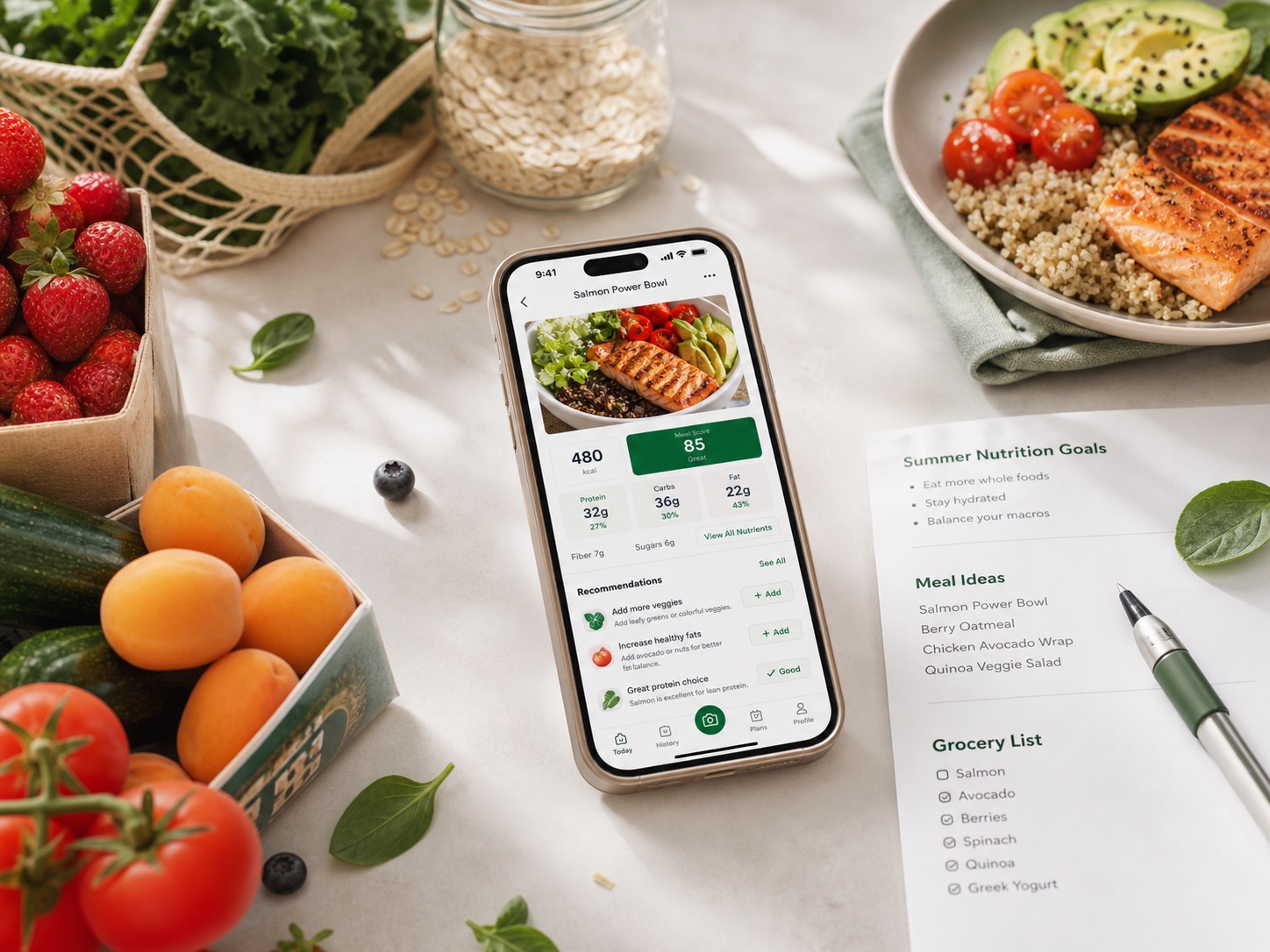
- For real meals, photo-based tracking still benefits from visible portions and short notes about oils, sauces, and hidden ingredients.
A handful of raw spinach weighs about 30 grams and delivers just 7 calories, 0.9g of protein, and 483 micrograms of vitamin K (over 400% of the daily value). Despite decades of mythology around its iron content, spinach is better understood as a nutrient-dense leafy green excelling in vitamin K, folate, lutein, and antioxidants — with iron as a secondary benefit, not a primary one.
This guide sources every number from USDA FoodData Central (raw spinach, NDB 11457) and explains what the data really means for your health.
Spinach Nutrition Facts (per 100g, raw)
| Nutrient | Amount | % Daily Value* |
|---|---|---|
| Calories | 23 kcal | 1% |
| Total Fat | 0.4 g | 1% |
| — Saturated Fat | 0.1 g | 1% |
| Carbohydrates | 3.6 g | 1% |
| — Dietary Fiber | 2.2 g | 8% |
| — Sugars | 0.4 g | — |
| Protein | 2.9 g | 6% |
| Vitamin K | 483 µg | 402% |
| Vitamin A (RAE) | 469 µg | 52% |
| Folate | 194 µg | 49% |
| Vitamin C | 28 mg | 31% |
| Iron (non-heme) | 2.7 mg | 15% |
| Magnesium | 79 mg | 19% |
| Potassium | 558 mg | 16% |
| Lutein + Zeaxanthin | 12,198 µg | — |
*Daily Values based on a 2,000-calorie reference diet (FDA). Individual needs vary.
For a typical cooked serving (about 145g fresh spinach → 90g cooked), multiply raw values by 0.9; nutrients concentrate slightly due to water loss. For a 30g raw handful, divide by 3.3.
The Vitamin K and Folate Powerhouse
Raw spinach has 483 micrograms of vitamin K per 100 grams — more than five times the daily value. Vitamin K is not a single compound; there are two main forms: K1 (phylloquinone, abundant in leafy greens) and K2 (menaquinone, found in fermented foods and animal products). Spinach is almost entirely K1.
Vitamin K’s primary role is γ-carboxylation of specific proteins involved in blood clotting (factors II, VII, IX, X) and bone mineralization (osteocalcin). Low vitamin K intake is associated with increased fracture risk and impaired bone density, especially in postmenopausal women. A meta-analysis by Vermeer & Theuwissen (2011) found that higher phylloquinone intake correlates with higher bone mineral density.
Spinach also provides 194 micrograms of folate per 100g (49% of the daily value), which is critical for one-carbon metabolism, DNA synthesis, and—during pregnancy—prevention of neural tube defects. The combination of folate + vitamin K makes spinach a cornerstone vegetable for bone health and cardiovascular function.
What to know if you take warfarin
Warfarin (Coumadin) is a vitamin K antagonist — it blocks the recycling of vitamin K, creating a therapeutic anticoagulant state. High vitamin K intake does not cause clotting, but sudden changes do. If you take warfarin:
- Maintain consistent spinach intake week to week. Your INR (International Normalized Ratio) is calibrated to your baseline vegetable consumption.
- Inform your anticoagulation clinic that you eat spinach; they will adjust your warfarin dose accordingly.
- Sudden increase or decrease in intake can drop your INR below therapeutic range (increasing clot risk) or raise it too high (increasing bleeding risk).
- Newer anticoagulants (apixaban, dabigatran, rivaroxaban) are not affected by dietary vitamin K.
The Iron Myth: History and Reality
How the “Popeye decimal” was born
In 1870, the German chemist E. von Wolf analyzed spinach and reported an iron content of 35 mg per 100g — a remarkable figure that led to spinach’s reputation as a superfood for anemia. In the 1920s, physicist Arnold Ihde recounted a story (now widely disputed) that a decimal point error had inflated the number tenfold: the actual iron content was 3.5 mg per 100g, not 35 mg.
Modern USDA data confirms: raw spinach contains 2.7 mg of iron per 100g — still meaningful, but hardly a cure for anemia. The myth persisted because it was a good story and because spinach does contain iron; what the myth missed was bioavailability.
Why spinach iron is hard to absorb
Iron exists in two forms in food:
- Heme iron (from meat, fish, poultry): 15-35% absorption
- Non-heme iron (from plants, fortified cereals): 2-20% absorption, depending on other foods
Spinach iron is non-heme, and spinach is high in oxalates (656 mg per 100g raw). Oxalate is a plant compound that binds minerals — particularly calcium and iron — forming insoluble complexes in the digestive tract. This dramatically reduces absorption.
Studies on spinach iron bioavailability report absorption rates of 2-13%, depending on:
- Oxalate content — raw spinach has more bioavailable oxalate than cooked (heat degrades it)
- Vitamin C co-intake — ascorbic acid (citrus, peppers, tomatoes) reduces oxalate binding and can increase non-heme iron absorption 3-4 fold
- Individual digestive factors — stomach acid, gut pH, calcium intake, and phytate (grain fiber) also influence iron absorption
Practical takeaway: A spinach salad with lemon juice + chickpeas provides roughly 2-3x more absorbable iron than the same spinach alone, because vitamin C enhances non-heme iron absorption and the legumes add heme-free iron from a different source.
Lutein and Zeaxanthin: Eye and Brain Protection
Spinach is among the richest dietary sources of lutein and zeaxanthin, a pair of carotenoids that accumulate in the macula (the central retina responsible for detailed vision). USDA data lists 12,198 micrograms of lutein + zeaxanthin per 100g raw spinach — by far the highest among common vegetables.
The Age-Related Eye Disease Study (AREDS2, NEI, 2013) found that higher dietary lutein + zeaxanthin intake is associated with lower risk of age-related macular degeneration (AMD), a leading cause of vision loss in older adults. The protective effect is thought to operate via:
- Antioxidant activity — carotenoids neutralize reactive oxygen species in the retina
- Blue light filtering — lutein and zeaxanthin absorb short-wavelength blue light, reducing photoxidative stress
- Accumulation in retinal tissue — the body preferentially deposits these carotenoids in the macula
A 100g serving of raw spinach (a large salad) provides a meaningful dose of both compounds. Cooking does not destroy lutein/zeaxanthin as it does vitamin C — in fact, heat may slightly increase bioavailability by breaking down cell walls.
Beyond eye health, lutein is present in the hippocampus and prefrontal cortex; observational studies link higher lutein intake to better cognitive function in aging, though causation remains unclear.
Raw vs. Cooked: Oxalates, Nutrients, and Absorption
Raw spinach
- Advantages: Retains 100% of vitamin C, more phytonutrients
- Disadvantages: Highest oxalate content (~656 mg per 100g). Oxalates bind calcium, iron, and magnesium, reducing bioavailability. Oxalates can also irritate the mouth (that “sandy” feeling)
- Best for: Salads paired with vitamin C sources and calcium-rich foods (dairy, fortified plant-based milk)
Cooked spinach (steamed 3-5 min)
- Advantages: Heat reduces bioavailable oxalates by 50-70%, dramatically improving calcium and iron absorption. Nutrients become more concentrated (water is removed). Vitamin K is stable to heating
- Disadvantages: Vitamin C content drops ~30%. Spinach volume shrinks dramatically (300g raw becomes ~100g cooked)
- Best for: Side dishes, smoothie bases (once cooled), creamed spinach, pasta sauces
Boiled spinach (historically common)
- Not recommended — water-soluble vitamins (C, folate) leach into the cooking water. Unless you consume the water as a broth, boiling removes more nutrients than steaming
One practical advantage of cooking: oxalate-bound calcium becomes more absorbable. A 3.5 oz serving of cooked spinach provides ~100 mg of absorbable calcium (compared to ~30-50 mg from raw, due to oxalate interference). This is why some nutritionists recommend cooked spinach for people concerned about bone health, despite the small loss of vitamin C.
How to Maximize Spinach Absorption and Benefits
-
Pair raw spinach with vitamin C — Add lemon juice, citrus, or sliced peppers to a spinach salad. This increases non-heme iron absorption and supports collagen synthesis. Avoid adding concentrated calcium supplements to raw spinach, as the oxalate will bind it.
-
Cook spinach lightly if you have kidney stone history — Steaming for 3-5 minutes or brief sautéing reduces bioavailable oxalates, lowering urinary oxalate load. Boiling is less desirable.
-
Eat spinach regularly with consistent portion — If on warfarin, keep intake steady. Vitamin K is fat-soluble and accumulates; the body adapts to a regular intake pattern.
-
Don’t over-supplement calcium alongside raw spinach — The oxalates will bind it anyway. If supplementing, take at a different meal.
-
Combine with adequate stomach acid — Non-heme iron absorption requires acidic pH in the stomach. People on long-term proton pump inhibitors (PPIs) for acid reflux may absorb less iron from spinach. Taking iron with food (spinach included) and vitamin C enhances absorption despite medication.
When Spinach Might Not Fit Your Diet
- Warfarin or other vitamin K antagonist anticoagulants — Not a contraindication, but requires informed, consistent intake. Discuss with your anticoagulation clinic.
- History of kidney stones or high urinary oxalate — Spinach is among the highest-oxalate vegetables. Limit to 1-2 servings per week or cook it before eating. Drink plenty of water.
- Hyperthyroidism or thyroid nodules — Spinach contains goitrogens (compounds that can interfere with iodine uptake), but only at extreme intake (>200g raw daily). At normal portions (30-100g), this is not a concern if iodine intake is adequate (iodized salt, seaweed, eggs, dairy).
- Gout — Spinach contains moderate purines (~71 mg per 100g), which are metabolized to uric acid. People with acute gout flares should limit all high-purine foods, including spinach. Chronic gout on allopurinol does not require avoidance.
- Severe kidney disease (CKD stages 4-5) — Spinach is high in potassium (558 mg per 100g) and phosphorus. Dialysis patients and those with GFR <30 ml/min should limit to supervised portions, as hyperkalemia can affect heart rhythm.
The Bottom Line
Per 100g raw: 23 calories, 2.7 mg iron (but only 2-13% absorbed), 483 µg vitamin K, 12,198 µg lutein/zeaxanthin, 194 µg folate. Spinach excels as a low-calorie, nutrient-dense leafy green — particularly for vitamin K status, eye health, and folate intake. The iron, while present, is modest in quantity and bioavailability; its reputation far exceeds its reality. Cooking reduces oxalates and improves mineral absorption; pairing with vitamin C further boosts iron uptake. Consistent, moderate intake (1-2 cups raw or ½ cup cooked daily) fits most diets and is supported by decades of epidemiological research linking leafy green consumption to lower cardiovascular and cognitive decline risk.
Frequently asked questions
How many calories are in 100g of raw spinach?
Raw spinach contains just 23 calories per 100g, making it one of the lowest-calorie vegetables available. A typical 30g serving (a small handful of raw leaves) provides about 7 calories. Even cooked spinach (which becomes more concentrated) is only 23 calories per 100g because cooking removes water, not calories per unit mass.
Is the iron in spinach really absorbed?
Spinach contains 2.7mg of iron per 100g, but bioavailability is low—only 2-13% is absorbed due to non-heme iron (plant-based) and high oxalate content, which binds iron and blocks absorption. This is the "Popeye decimal" myth: the benefit was overstated by a 10x decimal error in 1870. Pairing spinach with vitamin C (citrus, tomatoes) improves non-heme iron absorption to 3-4x higher.
Why is spinach so high in vitamin K?
Spinach contains 483µg of vitamin K per 100g—about 402% of the daily value for adults. This extreme density comes from chlorophyll metabolism; vitamin K is essential for blood clotting and bone mineralization. If you take warfarin or other anticoagulants, maintain consistent spinach intake and inform your doctor rather than avoiding it entirely.
Does cooking spinach destroy nutrients?
Cooking concentrates some nutrients (vitamin K, lutein) while reducing others (vitamin C drops ~30%). Heat also breaks down oxalates, increasing calcium and iron bioavailability—though absorption is still limited by non-heme iron. Steaming for 3-5 minutes or brief sautéing preserves more vitamin C than boiling.
Does spinach cause kidney stones?
Spinach is high in oxalates (656mg per 100g raw), which can bind calcium and increase urinary oxalate. People with a personal or family history of kidney stones should limit intake to 1-2 servings per week or cook spinach (heat reduces bioavailable oxalates). The general population can safely eat spinach daily.