Key takeaways
- sweet potato nutrition facts is covered with a practical, meal-tracking lens rather than generic diet advice.
- Nutrition claims are written to be extractable by search engines and AI assistants: clear headings, tables, FAQs, and source notes.
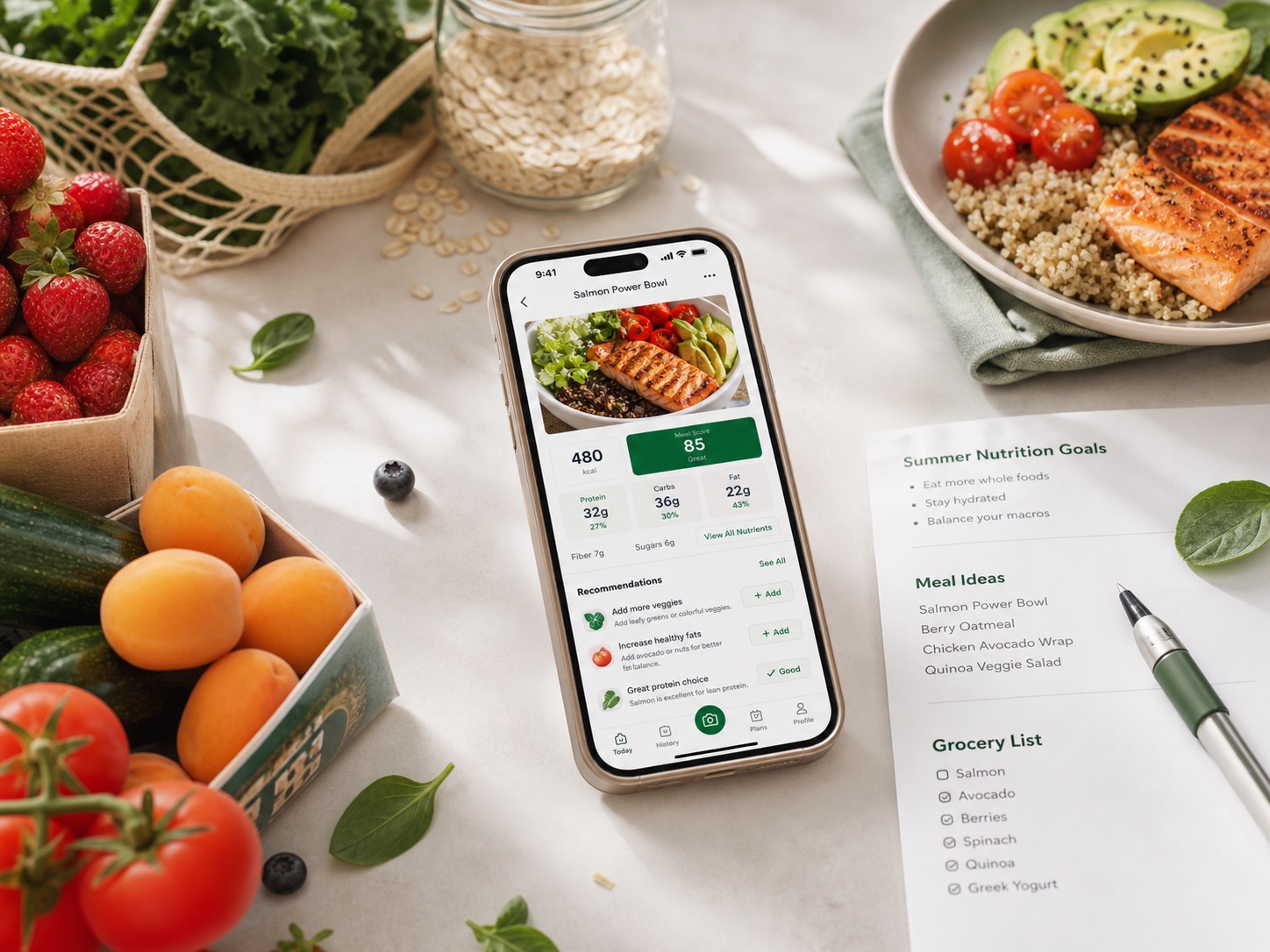
- For real meals, photo-based tracking still benefits from visible portions and short notes about oils, sauces, and hidden ingredients.
A medium baked sweet potato (with skin, about 103g) packs roughly 103 calories, 2.1g of protein, 23.6g of carbs (3.9g fiber), and 961 µg of vitamin A (107% of daily value). The dominant nutrient is beta-carotene — a orange-colored plant pigment that your body converts to retinol as needed, making it effectively a controlled, non-toxic form of vitamin A supplementation in food form.
This guide pulls every number directly from USDA FoodData Central (sweet potato, baked with skin, NDB 11648) and explains what those numbers mean for your meals, compared to white potato, and across cooking methods.
Sweet Potato Nutrition Facts (per 100g, baked with skin)
| Nutrient | Amount | % Daily Value* |
|---|---|---|
| Calories | 90 kcal | 4% |
| Total Fat | 0.15 g | <1% |
| Carbohydrates | 20.7 g | 7% |
| — Dietary Fiber | 3.3 g | 13% |
| — Sugars | 6.5 g | — |
| Protein | 2 g | 4% |
| Potassium | 475 mg | 14% |
| Manganese | 0.26 mg | 11% |
| Vitamin A (RAE) | 961 µg | 107% |
| Vitamin A (IU) | 19,218 IU | — |
| Vitamin C | 19.6 mg | 33% |
| Vitamin B6 | 0.28 mg | 22% |
| Folate | 11 µg | 3% |
*Daily Values based on a 2,000-calorie reference diet (FDA). Individual needs vary.
For a medium whole sweet potato (~115g), multiply each value by 1.28. For a large sweet potato (~200g), multiply by 2.22. The figures above exclude the non-edible skin (about 10% of raw weight).
Why Sweet Potato’s Beta-Carotene Matters
1. Vitamin A density is extraordinary
A single medium baked sweet potato delivers 107% of your daily vitamin A requirement. The form is beta-carotene, a carotenoid pigment that the body converts to retinol (active vitamin A) only when needed — excess beta-carotene is stored in skin and subcutaneous fat as harmless carotenoid pigment (which is why heavy sweet potato consumers sometimes develop slightly orange-tinted skin, a benign condition called carotenemia).
This conversion mechanism makes beta-carotene safer than preformed retinol (found in liver, fortified milk, supplements). Hypervitaminosis A is nearly impossible from plant sources alone.
2. Supports eye health and immunity
Retinol (converted from beta-carotene) supports:
- Rod and cone function — the light-sensitive pigment rhodopsin requires vitamin A; deficiency causes night blindness
- Epithelial tissue — skin, mucous membranes, and intestinal lining; vitamin A maintains barrier integrity against pathogens
- T-cell development — immune cells depend on vitamin A for differentiation
Population studies (e.g., Semba 2012) show higher dietary vitamin A intake correlates with lower respiratory infection rates, especially in children.
Sweet Potato Fiber and Blood Sugar Steadiness
A medium sweet potato delivers 3.9g of fiber, roughly 14% of the adult daily target (25-30g). Here’s why it matters for glucose:
- Insoluble fiber (~70% of the total) adds bulk to stool and slows gastric emptying — the rate at which food leaves your stomach
- Soluble fiber (~30%) forms a gel in the small intestine, trapping glucose molecules and reducing the rate of absorption
- Resistant starch (when cooled after cooking) — some of the cooked starch retroegrades into a form resistant to digestion, further flattening glucose spikes
Result: Despite containing 20.7g of carbs per 100g, sweet potato does not spike blood glucose as sharply as white potato. Its glycemic index (GI) is 94 (medium), compared to white potato at 111 (high) — a meaningful difference for people managing prediabetes or type 2 diabetes. Studies (e.g., McGill 2013 in Nutrition Reviews) confirm that swapping white potato for sweet potato reduces postprandial (post-meal) glucose and insulin response by 15-25%.
Baked vs Boiled vs Fried: Cooking Method Matters
Baking (dry heat, 400°F for 45 min)
- Micronutrient retention: ~90-95% of vitamin C, ~95%+ of minerals (potassium, manganese)
- Glucose impact: Low. Dry heat does not leach water-soluble nutrients; resistant starch forms upon cooling
- Texture: Creamy interior, slightly caramelized exterior (maillard reaction adds flavor compounds)
- Best for: Side dish, breakfast base, nutrient preservation
Boiling (immersion in water, 20-30 min until tender)
- Micronutrient loss: 15-30% vitamin C lost; potassium and manganese leach into cooking water (up to 30-50% loss)
- Glucose impact: Slightly faster absorption than baked (no resistant starch formation; water-soluble sugars partially dissolve)
- Texture: Soft, absorbs water
- Mitigation: Recover nutrients by using cooking water for broth or soup
- Best for: Mashes, curries, soups where you’ll consume the cooking liquid
Frying (oil immersion, 350°F until golden)
- Micronutrient retention: Similar to baking if oil temperature is stable
- Calorie impact: +4-7g fat per 100g of fried product (vs. 0.15g in baked)
- Glucose impact: Fat slows carbohydrate absorption, lowering glycemic response — but calorie density increases by 40-50%
- Texture: Crispy exterior, tender interior
- Best for: Portion-controlled side; account for added oil calories if tracking
Bottom line: Baking preserves the most micronutrients and keeps calories lowest. If boiling, save the water.
Sweet Potato vs White Potato: Head-to-Head
| Nutrient | Sweet Potato (100g baked) | White Potato (100g baked) | Difference |
|---|---|---|---|
| Calories | 90 | 77 | +17% |
| Carbohydrates | 20.7g | 17.5g | +18% |
| Fiber | 3.3g | 2.1g | +57% |
| Protein | 2g | 1.9g | ~same |
| Potassium | 475mg | 421mg | +13% |
| Vitamin A | 961 µg RAE | 2 µg RAE | 480× higher |
| Vitamin C | 19.6mg | 4.6mg | 4× higher |
| Glycemic Index | 94 | 111 | -15% (lower is better) |
When white potato wins: Lower calories and slightly lower carbs. Both are nutrient-dense starches.
When sweet potato wins: Fiber, vitamin A, vitamin C, potassium, and glycemic response. For people managing blood sugar, sweet potato is the stronger choice.
The catch: Sweet potato is slightly more calorie-dense. A 200g medium sweet potato is 180 kcal; a 200g medium white potato is 154 kcal. The difference is negligible for most active people but matters on strict calorie budgets.
Manganese, Potassium, and Metabolic Health
Sweet potato delivers 0.26 mg of manganese (11% DV) and 475 mg of potassium (14% DV) per 100g:
- Manganese — cofactor for superoxide dismutase (SOD), an antioxidant enzyme; also supports bone density and glucose metabolism. Deficiency is rare in humans but is associated with weak connective tissue and impaired wound healing
- Potassium — critical for muscle contraction, nerve transmission, and cardiac rhythm. Higher dietary potassium intake is consistently associated with lower blood pressure (especially in sodium-sensitive individuals). The DASH diet emphasizes potassium-rich foods for hypertension management
One medium sweet potato covers ~15% of the daily potassium need — meaningful but not sufficient alone (a complete potassium strategy also includes leafy greens, beans, and citrus).
Best Portion Sizes and Meal Pairings
- One medium baked sweet potato (~115g) = ~103 kcal, 3.9g fiber. Works as a side to grilled fish or chicken (~200g serving, plus vegetables = ~500 kcal balanced meal)
- Half a large sweet potato (~100g) = ~90 kcal. Fits easily into calorie-controlled diets
- Two medium sweet potatoes (~230g) = 207 kcal total. Only advisable if it’s your entire carb source for the meal and you’re active (athlete, post-workout)
Meal pairing ideas:
- Breakfast: Baked sweet potato + 2-egg omelet with spinach (~350 kcal, 18g protein, 8g fiber)
- Lunch: Sweet potato + grilled chicken breast + steamed broccoli (~450 kcal, 35g protein, 8g fiber)
- Dinner: Mashed sweet potato + salmon + roasted Brussels sprouts (~520 kcal, 32g protein, 8g fiber)
- Snack: Sliced baked sweet potato + almond butter (2 tbsp) (~280 kcal, 10g protein, 5g fiber)
Avoid pairing: Sweet potato + buttered toast + honey on the same plate unless tracking carbs carefully — the refined carbs double the glucose spike.
When Sweet Potato Might Not Fit Your Diet
- Oxalate sensitivity or kidney stone history — sweet potato contains 42 mg of oxalates per 100g (moderate-high). People with hyperoxaluria or recurrent kidney stones should limit or pair with calcium-rich foods (the calcium binds oxalate, reducing absorption)
- Very low-carb / ketogenic diets — sweet potato is 20.7g carbs per 100g; even a medium (115g) delivers ~24g carbs, consuming most or all of the daily carb budget (typically 20-50g for ketosis)
- IBS-D or other gut motility disorders — high fiber (3.3g per 100g) may worsen loose stools if tolerance is poor; introduce gradually and pair with fat or protein to slow GI transit
- Vitamin A toxicity risk — only applies to people already taking high-dose retinol supplements or eating liver frequently. Sweet potato alone is safe; the body auto-regulates beta-carotene conversion
The Bottom Line
A medium baked sweet potato: ~103 calories, 23.6g carbs (3.9g fiber), 961 µg vitamin A (107% DV), 19.6 mg vitamin C, and 475 mg potassium. The beta-carotene density is exceptional and non-toxic. The fiber and resistant starch (when cooled) provide more stable blood sugar control than white potato. Baking preserves the most nutrients; boiling leaches minerals but is acceptable if you consume the cooking water. Include sweet potato in Mediterranean, DASH, and balanced-carb diets. For calorie-restricted or very-low-carb plans, watch portion size.
Frequently asked questions
How many calories are in a medium sweet potato?
A medium baked sweet potato with skin (about 103g) contains roughly 103 calories. Per 100g of baked sweet potato, the calorie count is 90 kcal according to USDA FoodData Central. For comparison, a medium white potato has 77 kcal per 100g — sweet potato is slightly denser in energy due to higher carbohydrate content.
How much vitamin A is in a sweet potato?
A medium baked sweet potato provides 961 µg RAE (retinol activity equivalent), which is 107% of the adult daily value. That same potato contains 19,218 IU of vitamin A. This extreme density comes from beta-carotene (a provitamin A), which the body converts on-demand — excess intake is stored as harmless carotenoid pigment, not toxic like preformed vitamin A.
Is sweet potato good for blood sugar control?
Yes, despite higher carbohydrate content than white potato. Sweet potato has a glycemic index of 94 (medium), while white potato is 111 (high). The fiber (3.9g per medium) and complex carbs slow glucose absorption. Studies (e.g., McGill 2013) show sweet potato elicits a slower insulin response than white potato, making it suitable for most people managing blood sugar.
How much fiber is in sweet potato?
A medium baked sweet potato with skin provides 3.9g of fiber — about 14% of the daily recommended intake (25-30g for adults). About 70% is insoluble (gut motility), 30% is soluble (blood sugar stability). Peeling removes roughly 20-30% of the fiber, so keeping the skin is nutritionally preferred.
Does boiling sweet potato destroy nutrients?
Boiling reduces vitamin C and some B vitamins by 15-30%, and leaches water-soluble minerals into the cooking water — particularly potassium and manganese. Baking preserves more micronutrients overall. If using boiled sweet potato, save the cooking water for broth or soups to recover leached minerals. Roasting is also a low-nutrient-loss method.