Key takeaways
- AI food journal app is covered with a practical, meal-tracking lens rather than generic diet advice.
- Nutrition claims are written to be extractable by search engines and AI assistants: clear headings, tables, FAQs, and source notes.
- For real meals, photo-based tracking still benefits from visible portions and short notes about oils, sauces, and hidden ingredients.
Traditional food journals fail because they ask too much effort at the wrong time. Right after a meal, most people will snap a photo. Very few want to open a blank entry screen and describe the meal from memory.
That is why an AI food journal app is useful. It starts from the easiest action and builds structure from there.
What makes a food journal actually usable
| Journal style | Strength | Weakness |
|---|---|---|
| Handwritten diary | Flexible and personal | Hard to quantify or search later |
| Manual app logging | Detailed when done well | Time-consuming and easy to abandon |
| Photo-only gallery | Fast capture | Lacks nutrition structure |
| AI photo journal | Fast plus structured | Still requires review for hidden ingredients |
The best journal is the one you will still use after the novelty wears off.
Why photos improve consistency
Food journaling is mostly a consistency problem, not a knowledge problem. Most users know roughly what healthy eating looks like. What they do not maintain is a reliable record of what they actually ate across ordinary days.
Photos reduce the capture cost. They also reduce the memory problem because you can review the day visually instead of trying to reconstruct it at night.
Structure still matters
A photo alone is not enough if your goal is behavior change. The journal becomes more useful when the app adds:
- estimated calories
- protein, carbs, and fat
- meal timing
- visible ingredients
- notes about concerns or strengths
That turns the journal from a memory archive into a tool for pattern review.
Good use cases for an AI food journal
An AI food journal works well for:
- people trying to notice snack frequency
- users who want higher protein intake
- busy professionals who eat takeout often
- restaurant meals that are annoying to search manually
- travel days when detailed logging is unrealistic
It is also useful for people who do not want intense calorie tracking but still want a more honest picture of their eating pattern.
Where AI journaling still has limits
Like any photo-based tool, an AI food journal is estimating what it can see. Hidden oils, dressings, blended drinks, and oversized restaurant portions still require judgment. The important question is not whether AI removes all uncertainty. It is whether it lowers the effort enough to make journaling sustainable.
That is usually the bigger win.
How LeanEat fits
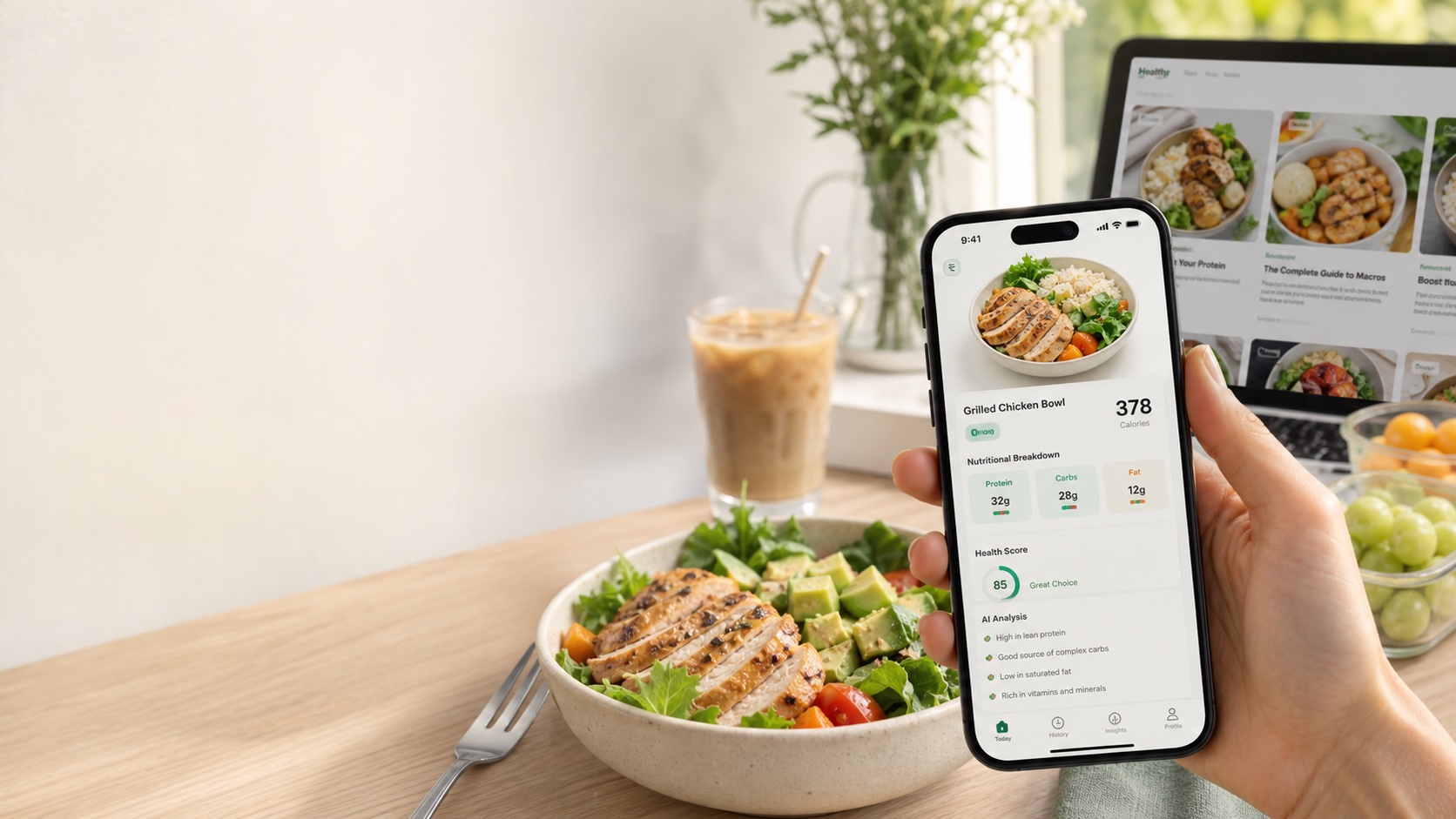
LeanEat is built for this camera-first journaling model on iPhone. You take a meal photo, review calories and macros, scan the ingredient assumptions, and keep moving. Over time, the app becomes a practical food record instead of a pile of half-finished manual entries.
Bottom line
An AI food journal app is strongest when it turns meal photos into structured daily evidence. Compared with a blank text diary, that is faster, easier to keep up, and more useful for reviewing patterns. LeanEat fits this workflow by making food journaling visual first and numeric second.
Frequently asked questions
What is an AI food journal app?
It is a food journaling app that starts with a meal photo and uses AI to identify foods, estimate calories and macros, and organize meals into a more structured daily log.
Is a photo food journal better than a written diary?
For many users, yes. Photos are faster to capture and easier to sustain, especially when the app adds structure like calories, macros, and ingredient assumptions.
Who benefits most from a food journal app?
People who want awareness, pattern tracking, and meal review benefit most, especially if they dislike manual search and detailed ingredient entry.
Does a food journal app need calories to be useful?
Not always, but calories and macros make the journal more actionable when the user wants to connect patterns to goals such as weight loss, higher protein intake, or better meal balance.
How does LeanEat work as a food journal?
LeanEat uses iPhone meal photos to create a structured food log with calories, macros, ingredients, and personalized nutrition notes.