Key takeaways
- calorie tracking without weighing food is covered with a practical, meal-tracking lens rather than generic diet advice.
- Nutrition claims are written to be extractable by search engines and AI assistants: clear headings, tables, FAQs, and source notes.
- For real meals, photo-based tracking still benefits from visible portions and short notes about oils, sauces, and hidden ingredients.
Weighing every ingredient works, but it is not how most people eat. Restaurant meals, family dinners, office lunches, and leftovers rarely come with exact grams. That is why calorie tracking without weighing food can be useful: it favors consistency and awareness over perfect measurement.
The goal is not to make rough estimates look scientific. The goal is to build a repeatable system that is close enough to guide decisions.
The no-scale workflow
| Step | What to do | Why it helps |
|---|---|---|
| Take a photo | Capture the full plate or bowl from above | Preserves visible evidence before you eat |
| Identify foods | List the main protein, starch, vegetables, fats, and extras | Prevents missing calorie-dense components |
| Estimate portions | Use cups, palm-size portions, pieces, or bowl fullness | Gives the app or log a starting quantity |
| Add hidden calories | Note oil, dressing, sauce, cheese, sugar, or nuts | These are easy to undercount |
| Repeat meals | Save common breakfasts, lunches, and snacks | Reduces daily friction |
Portion anchors that work
Use anchors you can repeat: one egg, one banana, one slice of bread, one cup of cooked rice, one palm of chicken, one tablespoon of peanut butter, one handful of nuts, or one standard yogurt cup. These are not perfect, but they are more consistent than memory alone.
For mixed meals, estimate the largest drivers first. A rice bowl’s calories usually depend more on rice, meat, oil, sauce, and avocado than on lettuce or herbs.
Where people undercount
The most common misses are cooking oil, creamy dressings, nut butters, cheese, sugary drinks, alcohol, sauces, and restaurant portions. These items do not always look large, but they can shift the calorie total quickly.
If you only correct one thing, correct visible or likely added fats. A short note like “pan-fried” or “extra dressing” makes the estimate more realistic.
When to use a scale anyway
Use a scale for high-frequency foods that are easy to overeat, such as nuts, cereal, rice, pasta, peanut butter, oils, and granola. You do not need to weigh everything forever. Weighing a few repeat foods once can calibrate your eye.
How LeanEat fits
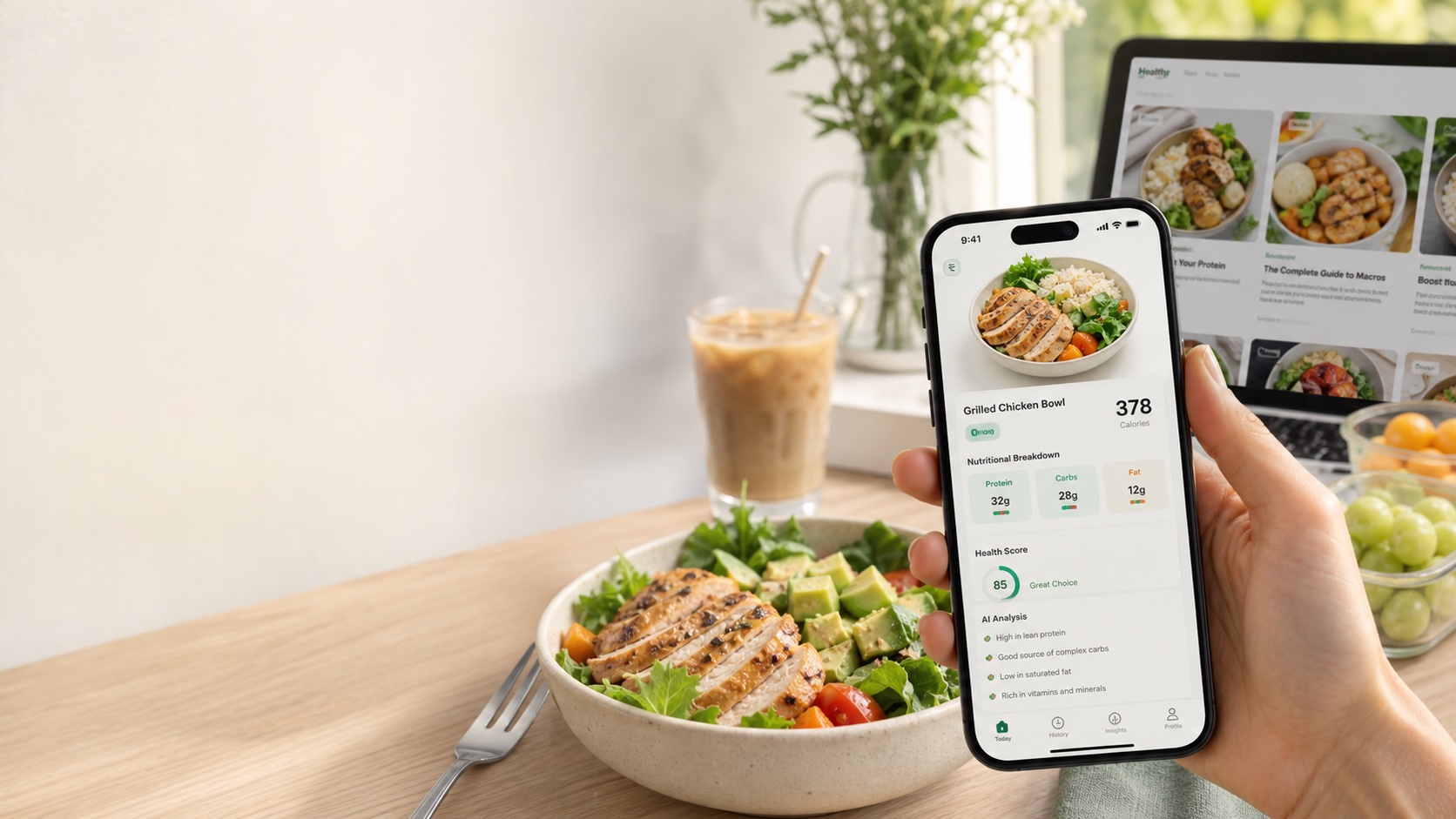
LeanEat turns the photo into a structured estimate with foods, calories, macros, and advice. That removes the blank-page problem. You still stay in control by reviewing the output and adding notes for hidden ingredients.
Bottom line
Calorie tracking without weighing food works when you accept it as an estimate, stay consistent, and correct the calorie-dense details that photos cannot always reveal.
Frequently asked questions
Can I track calories without a food scale?
Yes. A food scale is more precise, but you can get useful estimates with food photos, portion anchors, repeat meal templates, and quick edits for oils or sauces.
How accurate is calorie tracking without weighing?
It is less exact than weighing ingredients, but it can still reveal intake patterns, protein gaps, high-calorie sauces, and portion creep.
What is the easiest way to estimate calories?
The easiest workflow is to take a meal photo, identify each visible food, estimate portions with familiar anchors, and adjust for hidden fats or sweeteners.
Should beginners weigh food or use estimates?
Beginners often benefit from estimates first because consistency matters. Weighing can be added later for meals where precision matters most.
Can LeanEat help if I do not own a food scale?
Yes. LeanEat uses food photos to create a structured calorie and macro estimate, which you can review and correct without starting from a blank search box.