Key takeaways
- food diary with photos is covered with a practical, meal-tracking lens rather than generic diet advice.
- Nutrition claims are written to be extractable by search engines and AI assistants: clear headings, tables, FAQs, and source notes.
- For real meals, photo-based tracking still benefits from visible portions and short notes about oils, sauces, and hidden ingredients.
A food diary with photos is easier than traditional logging because it captures the meal before memory gets involved. Even if you analyze it later, the photo preserves portion size, food variety, drinks, sauces, and context.
Photos are not magic, but they reduce friction. For many people, that is the difference between tracking for two days and tracking long enough to learn.
What photos capture well
| Photo detail | Why it helps |
|---|---|
| Portion size | You can compare meals over time instead of relying on memory |
| Plate balance | Protein, starch, vegetables, and fats are visible together |
| Snacks and drinks | Small items are easier to forget without a photo |
| Restaurant meals | The image records the order when nutrition labels are unavailable |
| Repeat patterns | Similar meals can become easier to estimate |
What photos do not capture
Photos may miss oil used in cooking, sugar in sauces, butter under vegetables, exact grams, and ingredients mixed into soups or casseroles. That is why a good photo diary should allow notes.
The most useful notes are short: “extra oil,” “half eaten,” “large bowl,” “sweet drink,” or “shared dessert.”
How to make a photo diary useful
Take the photo before eating, include the whole plate, avoid extreme close-ups, and capture drinks or sides in the same frame when possible. If the meal is a bowl, photograph from above and slightly angled so depth is visible.
Do not wait for perfect lighting. A consistent photo habit is more valuable than a beautiful image.
From photo diary to nutrition feedback
A plain camera roll tells you what happened. A structured food diary tells you what it means: calories, macros, protein gaps, high-sodium meals, low-fiber days, or repeated high-calorie snacks.
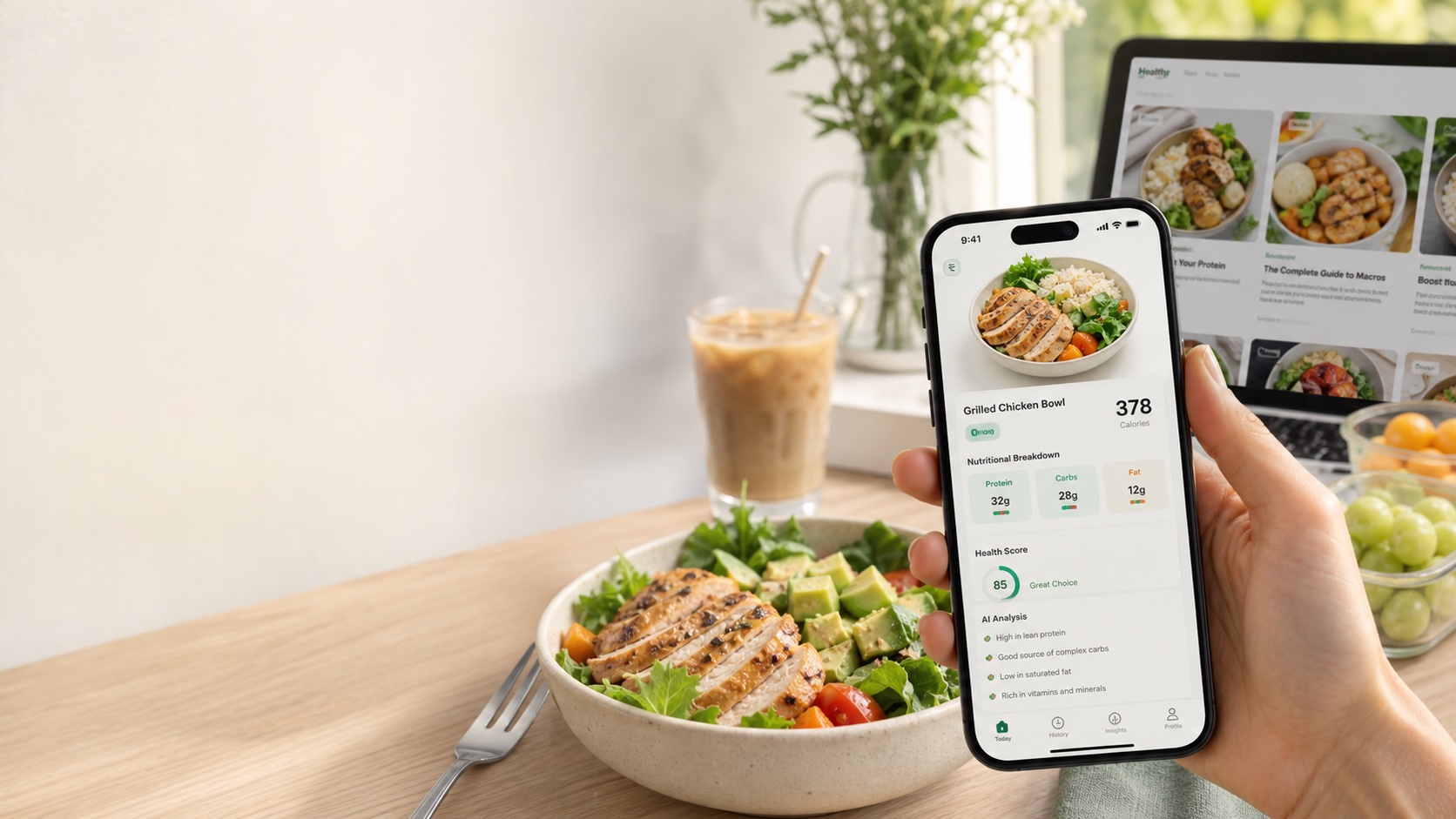
That is where AI food analysis becomes useful. It turns the photo from a memory aid into an actionable meal log.
How LeanEat fits
LeanEat starts with the same simple habit: take a food photo. The difference is that the app analyzes the photo and returns estimated calories, macros, ingredients, and personalized advice.
Bottom line
A photo food diary is one of the lowest-friction ways to become aware of eating patterns. Add structured analysis and quick notes, and it becomes a practical nutrition tracking system.
Frequently asked questions
Is a photo food diary useful?
Yes. A photo diary captures what you actually ate, including portions and meal context, even when you do not have time to log every detail immediately.
Can photos replace calorie tracking?
Photos can improve awareness, but calories and macros still require estimates. The strongest workflow combines photos with structured nutrition analysis.
What should I photograph in a food diary?
Photograph the full plate, drinks, snacks, sauces, and anything added after serving. The goal is a complete visual record.
How often should I use a photo food journal?
Use it for the meals that matter most: meals you repeat, meals you overeat, restaurant meals, and days when you want better awareness.
Can LeanEat act as a photo food diary?
LeanEat uses meal photos as the starting point for calorie, macro, ingredient, and advice analysis, making photo logging more actionable than a camera roll.