Key takeaways
- how to track restaurant meals is covered with a practical, meal-tracking lens rather than generic diet advice.
- Nutrition claims are written to be extractable by search engines and AI assistants: clear headings, tables, FAQs, and source notes.
- For real meals, photo-based tracking still benefits from visible portions and short notes about oils, sauces, and hidden ingredients.
Restaurant meals are the hardest part of food tracking because the most important details are often hidden. You can see the burger, pasta, curry, or salad, but you may not know how much oil, butter, sauce, sugar, or cheese was used.
The best approach is a consistent estimate. It should be honest about uncertainty and useful enough to keep you tracking.
Restaurant tracking workflow
| Step | Action | Example |
|---|---|---|
| Photograph first | Capture the plate before eating | Include sides, sauces, and drinks |
| Break down the meal | Protein, starch, vegetables, fats, sauces | Chicken, rice, salad, dressing |
| Estimate portion | Full plate, half plate, one bowl, shared dish | ”Ate 70% of the bowl” |
| Adjust for prep | Fried, creamy, buttered, glazed, breaded | Add calories for oil or sauce |
| Save patterns | Reuse common orders | Same poke bowl, burrito, or sushi set |
What to look for in the photo
Start with the calorie drivers. In a burrito bowl, that usually means rice, beans, meat, cheese, sour cream, guacamole, and dressing. In a pasta dish, it is pasta portion, cream or oil, cheese, meat, and bread. In sushi, it is rice volume, sauces, fried toppings, and mayo.
Vegetables matter for nutrition, but they are rarely the reason a restaurant meal becomes high calorie.
Add a short note
A short note can improve the estimate more than a long search. Useful notes include:
- fried
- creamy sauce
- extra dressing
- half eaten
- shared appetizer
- large portion
- sweet drink
- dessert included
Avoid the two common mistakes
The first mistake is logging only the visible healthy item, such as “salad,” while ignoring dressing, nuts, cheese, croutons, and oil. The second mistake is giving up because the exact recipe is unknown.
A restaurant estimate will not be perfect, but it can still show whether the meal was light, moderate, or calorie dense.
How LeanEat helps
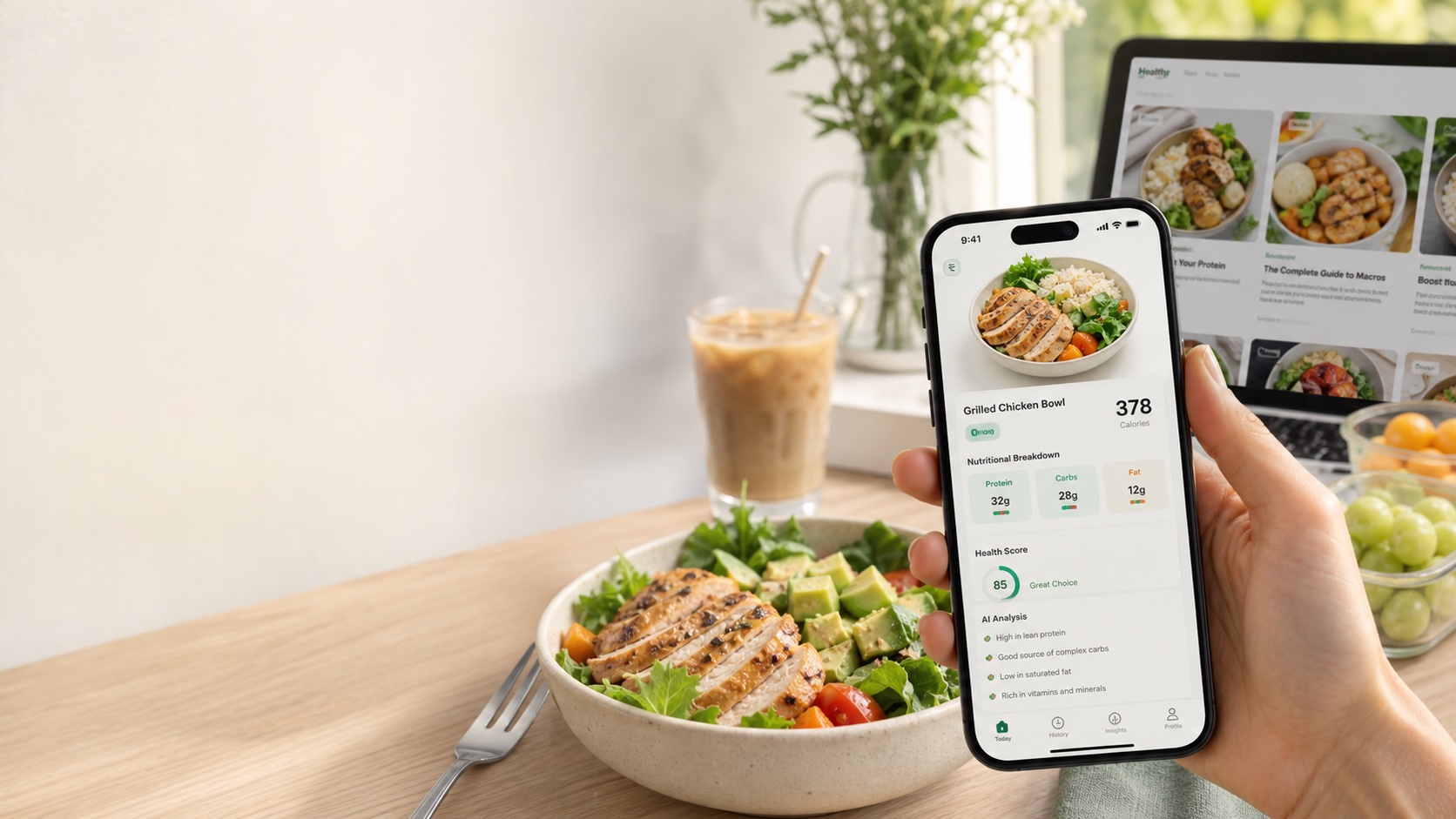
LeanEat lets you start with the restaurant photo instead of a database search. It identifies visible foods, estimates calories and macros, and returns advice you can adjust with a quick note.
Bottom line
Track restaurant meals with a photo-first estimate, correct for hidden fats and sauces, and keep the habit moving. Consistency matters more than exactness when the kitchen details are unknown.
Frequently asked questions
How do I track calories when eating out?
Start with a photo, identify the main protein, starch, vegetables, sauces, and fats, then use a comparable restaurant entry or AI estimate as a starting point.
Why are restaurant calories hard to estimate?
Restaurants often use more oil, butter, sauce, salt, and larger portions than home cooking. Those details may not be visible in the final dish.
Should I log restaurant meals exactly?
Exact logging is rarely possible. A consistent estimate is usually more useful than skipping the meal or spending too much time searching.
What details should I add to a restaurant meal log?
Add notes about fried foods, creamy sauces, large portions, shared plates, alcohol, desserts, and whether you ate the full serving.
Can LeanEat estimate restaurant meals from photos?
LeanEat can analyze a restaurant meal photo and produce a structured estimate for foods, calories, macros, ingredients, and practical advice.